


Building muscle: how EMS makes you stronger
Building muscle is not just about getting stronger – it’s about feeling steadier and more independent in everyday life. Conventional strength training still has its place, but many people also need a way to train that easily fits into their life. That’s where EMS training comes in. It combines active movement with targeted muscle stimulation, so you can train more efficiently and actually stick with it.
SYMBIONT EMS is designed for more than fitness alone. It brings together training, balance, health, rehabilitation and prevention in one clear, medically founded solution.
What does building muscle actually mean?
Building muscle happens when you use your muscles regularly and gradually demand more of them. Your body then responds during recovery by making them stronger. The benefits go far beyond appearance:
- Greater stability in everyday movement
- Less strain on your joints
- Better posture and mobility
- Everyday tasks – lifting, carrying and climbing stairs – become easier
- More resilience against the physical demands of daily life
As you get older, building muscle becomes an increasingly important part of your overall health. It’s no longer just about sport or strength. It’s about staying active, capable and independent, which makes it relevant for everyone.
SYMBIONT EMS targets the muscle groups you need for strength and performance without putting extra strain on the joints. It complements functional strength exercises, helps build a foundation for running, cycling and team sports, and strengthens the areas you rely on most during exercise and everyday movement.
How does the body build muscle?
Muscles respond to what you demand of them. When you challenge them regularly, your body starts to strengthen them step by step. The reverse is also true. If you don’t use your muscles enough, your body adapts by gradually breaking down muscle tissue it no longer needs.
A few things make the biggest difference:
- Training: you need to put muscles to work, either through strength training, functional exercises, EMS, or a combination of them.
- Recovery: muscle growth doesn’t happen during the workout itself. It happens afterwards, while your body rests and repairs.
- Consistency: regular training does more for you than the occasional hard session.
- Nutrition: your body needs enough energy and the right nutrients to build and maintain muscle.
All of these elements need to work together to build muscle effectively. And with more people looking for a way to train that they can actually stick to, EMS can help fill that gap.
Muscle mass starts to decline slowly between the ages of 30 and 40, often before you even notice it. From around 50 to 60, the process picks up pace. People can lose around 1% muscle mass and up to 3% muscle strength each year. This age-related loss of muscle mass, strength and physical performance is known as sarcopenia.
How does EMS help build muscle?
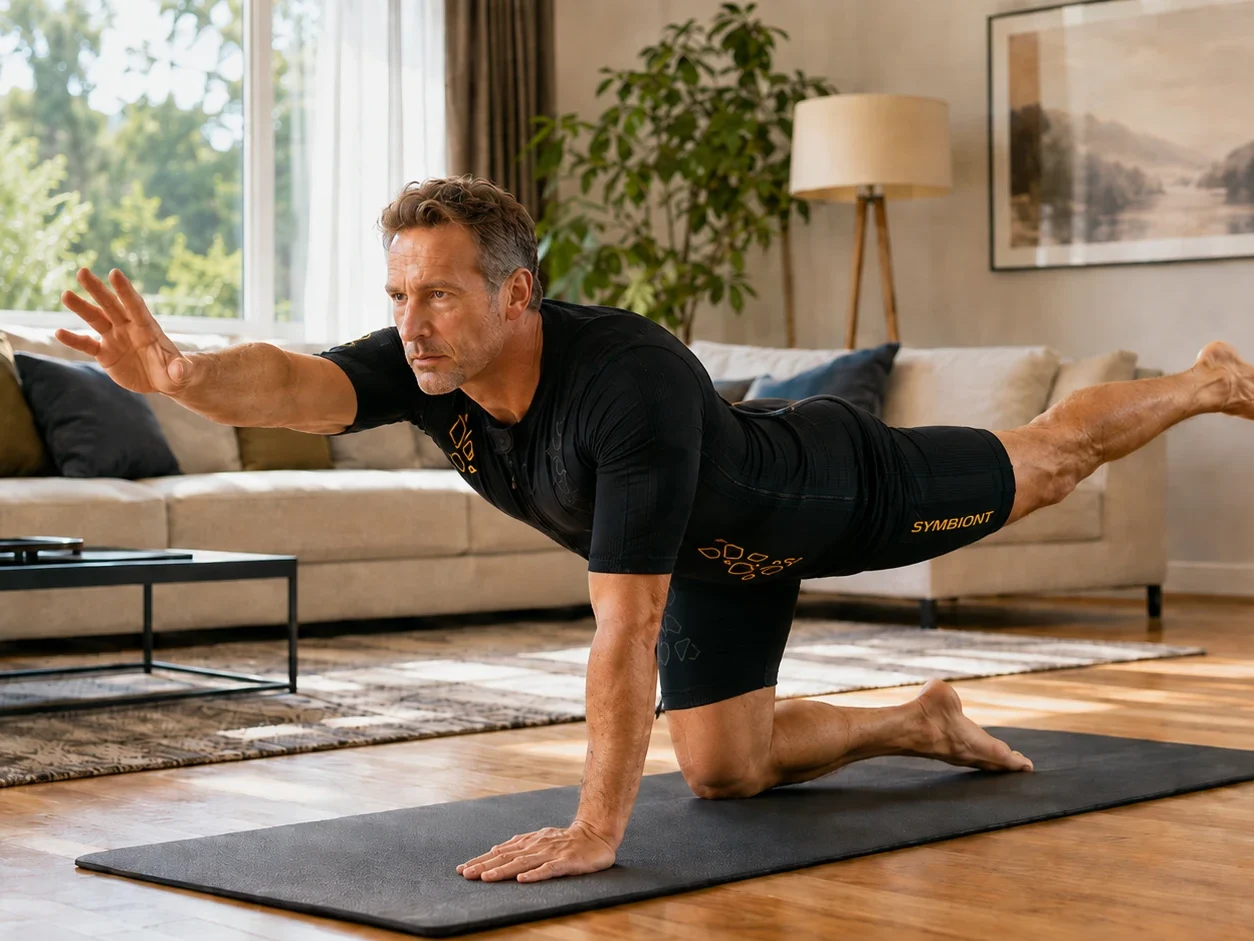
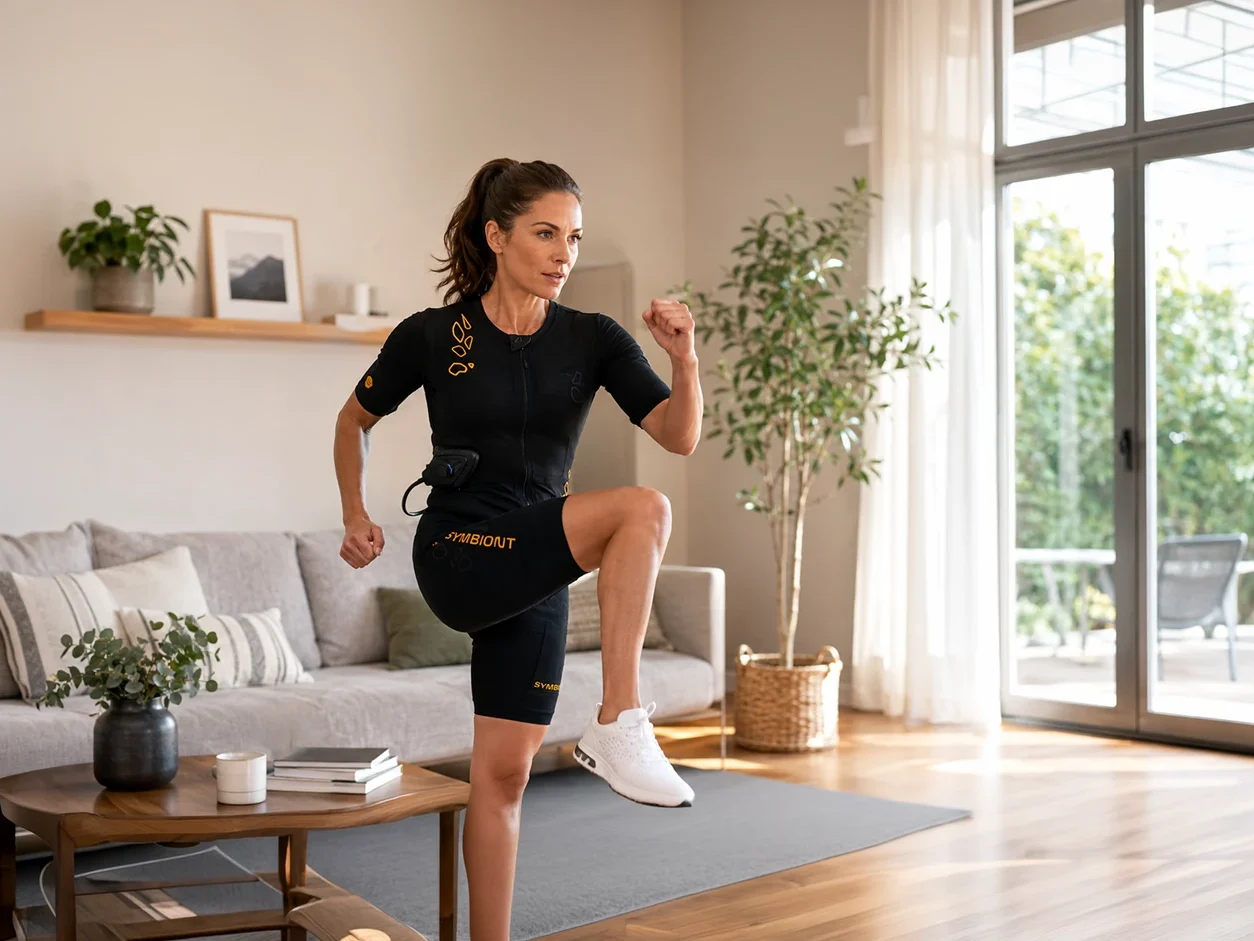
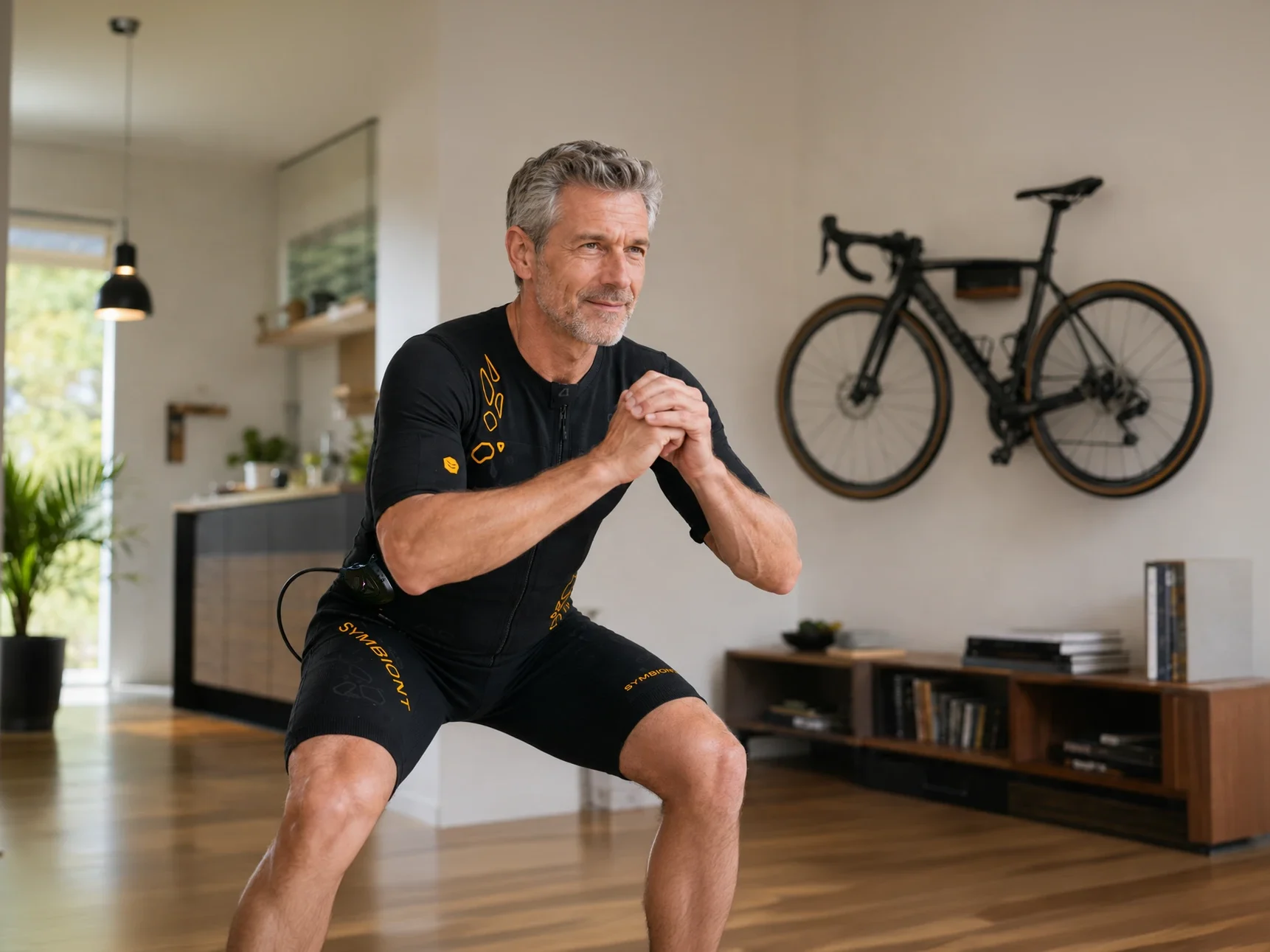
EMS stands for electrical muscle stimulation. During EMS training, electrical impulses activate your muscles while you move. This supports muscle contractions and can help recruit muscle fibres faster and more efficiently than movement alone.
EMS is typically used as part of a regular training plan. It can activate several muscle groups at once and works alongside whatever exercises you already do, regardless of where you train or what equipment you have access to.
In practice, that means:
- Several muscle groups activated at the same time
- Training intensity can be adjusted to your level
- Movement is combined with targeted muscle stimulation
- EMS can be used alongside strength training and functional training
EMS doesn’t replace conventional strength training, but it can be a genuinely useful addition.
How often should you train to build muscle?
Consistency is essential for building muscle. How often you train depends on your fitness level, how hard you train and how much time your body needs to recover between sessions. Your daily routine, how active you are outside the gym, and your goals also matter.
In practice, somewhere between two and five sessions a week works well for most people. Beginners tend to make solid progress with two to three full-body strength training sessions. People with more experience will usually train more often and focus more closely on individual muscle groups.
The exact number of sessions matters less than challenging each muscle group regularly, ideally around twice a week, and giving your body enough time to recover in between.
How can you build muscle at home?
More and more people are looking to build muscle at home. If you want to see real results, keep the following three things in mind:
- Aim for consistency: short, planned sessions are usually easier to maintain than long, sporadic ones.
- Choose the right exercises: focus on movements that work the muscles you want to build.
- Make it realistic: your training needs to fit your life, not the other way around.
EMS can add real value – it boosts muscle activation during simple exercises, so no gym is required.
Why does building muscle matter more as you get older?
Your muscles change as you age. Strength, stability and mobility can all decline if the body isn’t given enough to do. Regular training helps you:
- stay independent
- reduce the risk of falls and injuries
- reduce discomfort
- maintain your mobility
- handle everyday tasks more easily
- feel steadier and more in control
For older adults, building muscle is more about quality of life than athletic performance. EMS can help by activating muscles while you move, and the intensity can be adjusted to your level. That makes it a useful addition if you are new to training, returning after a break or need a gentler starting point.
With SYMBIONT EMS, you get individual support wherever you train, whether that’s in a studio, with a physiotherapist or through video sessions at home.
Conclusion: Building muscle is about more than hitting the gym
Healthy muscles are closely linked to long-term wellbeing. Conventional strength training is still important, but many people also need something that fits into everyday life.
EMS offers one way to do that. It combines movement with muscle stimulation, helping your muscles work harder while you train. Because the intensity can be adjusted to your level, EMS can also make regular exercise easier to keep up with.