


Post workout recovery: what your body needs after training
Post-workout recovery is everything your body does after exercise to get back to full strength. That includes repairing muscles, refilling energy stores, and even letting the nervous system settle down.
Whatever kind of training you do – strength, endurance or functional – every workout gives your body a signal to adapt, but the real effects don’t show up during the workout itself. They happen afterwards, during recovery.
This matters just as much for EMS training. The additional electrical impulses mean your muscles are trained intensively, making recovery all the more important.
How do muscles recover after exercise?
When muscles recover after exercise, it’s really the body’s repair and adaptation phase taking place. When we train, tiny amounts of damage occur in the muscle fibres. During recovery, the body repairs them and occasionally rebuilds them a little stronger than before. That process is what actually turns training into progress.
Several things are happening behind the scenes:
- Muscle structures are being repaired.
- Energy stores are being refilled.
- The nervous system is recalibrating.
- Inflammation is settling down.
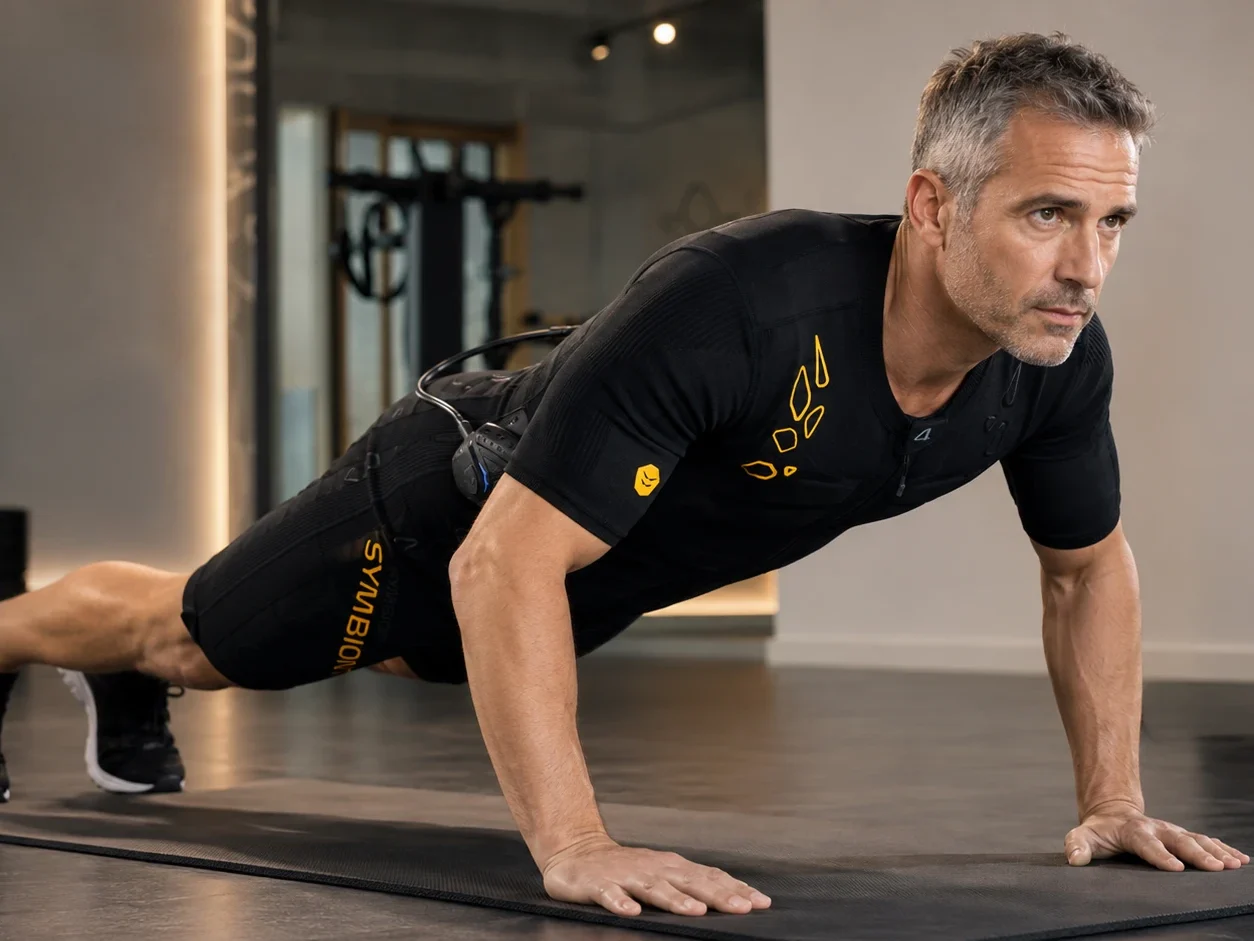
EMS training fits into this a little differently. The electrical impulses activate muscles while you train, which means EMS involves more muscle fibers at once than most conventional training. Depending on the intensity, your body may need a little longer to recover after exercise as a result. That being said, EMS also lets you control how intense the training is — so you can dial the demand up or down to suit you.
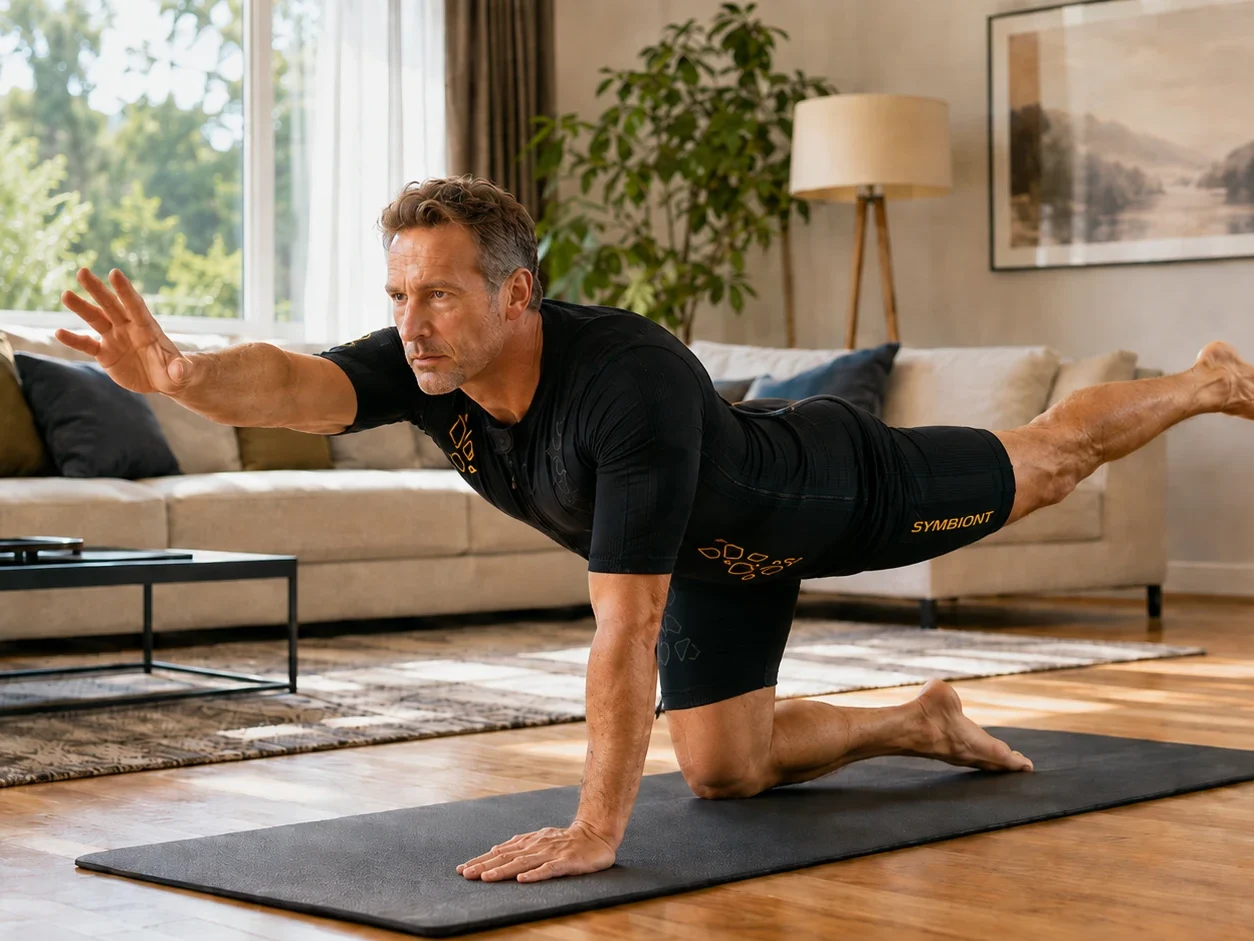
SYMBIONT EMS gives you precise control over the impulses, so you can adapt each session to a particular goal. Combine intense muscular activation with recovery-focused training, like low-intensity programs to support circulation and promote muscle relaxation.
How long does post-workout recovery take?
How long you need to recover depends on how hard you trained and your current fitness level:
- Light exercise: around 12 to 24 hours
- Moderate strength training: 24 to 72 hours
- Intense or new forms of training (like EMS): possibly longer
Muscle soreness isn’t a reliable guide to how well you’re recovering. It just means your muscles have been dealing with a kind of demand they’re not used to yet.
Muscle fatigue can feel different after EMS training compared to a conventional session.
How can you speed up muscle recovery?
It’s natural to want to recover as quickly as possible. But the body follows its own biological timeline – you can’t simply fast-forward it. What you can do is give it the right conditions to work with.
This should involve:
Incorporating movement into recovery: light movement after training can improve circulation and help the body as it recovers.
Getting enough sleep: sleep is essential for the nervous system to recover – particularly after an intense experience like EMS.
Eating well and getting enough hydration: enough protein, carbohydrates and fluids give the muscles what they need to repair.
Considering how you train too: recovery isn’t just about rest days. It also comes down to how you train. When intensity and recovery are properly balanced, the body bounces back much more easily.
How do EMS and recovery go together?
EMS training and recovery are more closely connected than you might think. EMS puts significant demand on the muscles – which means it needs appropriate recovery time afterwards. But used in the right way, it can also play an active role in the recovery process itself.
Depending on how you use it, EMS can serve quite different purposes when it comes to recovery:
1. Activating muscles intensively without the joint strain
EMS activates multiple muscle groups at once, which means you can challenge your muscles without placing heavy demands on your joints. That makes it ideal for anyone working on their stability or looking to strengthen their back muscles.
2. Supporting circulation
Lower-intensity EMS programs can improve blood flow, making it easier for the body to clear the by-products that build up during exercise – and giving recovery a nudge in the right direction.
3. Controlling how hard you’re training
EMS lets you control workout intensity extremely precisely. That makes it easy to keep training and recovery separate, and to plan both around what your body needs at any given time.
SYMBIONT EMS can promote circulation, ease muscular tension and aid recovery. It’s great for after sport or an EMS session, alongside yoga or Pilates, or simply on days when you’re taking it easy.
What about recovery after exercise in later life?
Recovery changes as we get older. Past a certain point, it typically takes longer – muscle mass, hormone levels and the body’s ability to repair itself all shift over time. The body may also become more sensitive to exertion as a result. That makes regular, moderate training and adequate rest all the more important.
For those looking to recover after exercise over 50, it’s a good idea to:
- give yourself more time to recover between intense sessions
- keep training regular without overdoing it
- focus on stability, mobility and maintaining muscle mass
- get into a recovery routine for after each session
EMS is also a popular choice in later life because it lets you get a good workout in that’s relatively short in duration and high in impact.
Seeing recovery as part of training
Recovery isn’t just downtime. It’s a central part of any training routine – and determines whether your body turns activity into progress.
EMS can help you manage your recovery by giving you precise control over how hard you train. This makes it easier to strike the right balance between pushing yourself and giving your body the time it needs to recover – whatever your age or fitness level.