
Muscular imbalances: how EMS can help
We’re spending more of our lives sitting down than ever or repeating the same movements over and over, even while exercising. All of this takes its toll on our bodies and can lead to certain muscle groups being overworked while others are left largely unused. The medical term for this is muscular imbalance, meaning uneven strength or tension across the musculoskeletal system.
Compensatory training is one of the most effective ways of addressing this issue. EMS is increasingly being used alongside traditional strength and mobility training.
What is compensatory training?
Compensatory training – sometimes called compensatory sport – covers any exercise or routine designed to counter the uneven strain of everyday life, work or sport. The aim is to:
- activate underused muscle groups
- build greater body awareness
- improve stability
- improve posture and core tension
- spread physical demand more evenly across the body
Which parts of the body are most affected by muscular imbalances?
The back, shoulders, hips and knees are often most affected. At first, you might only notice stiffness or discomfort when you move. Left unaddressed, though, muscular imbalances can put increasing strain on specific joints.
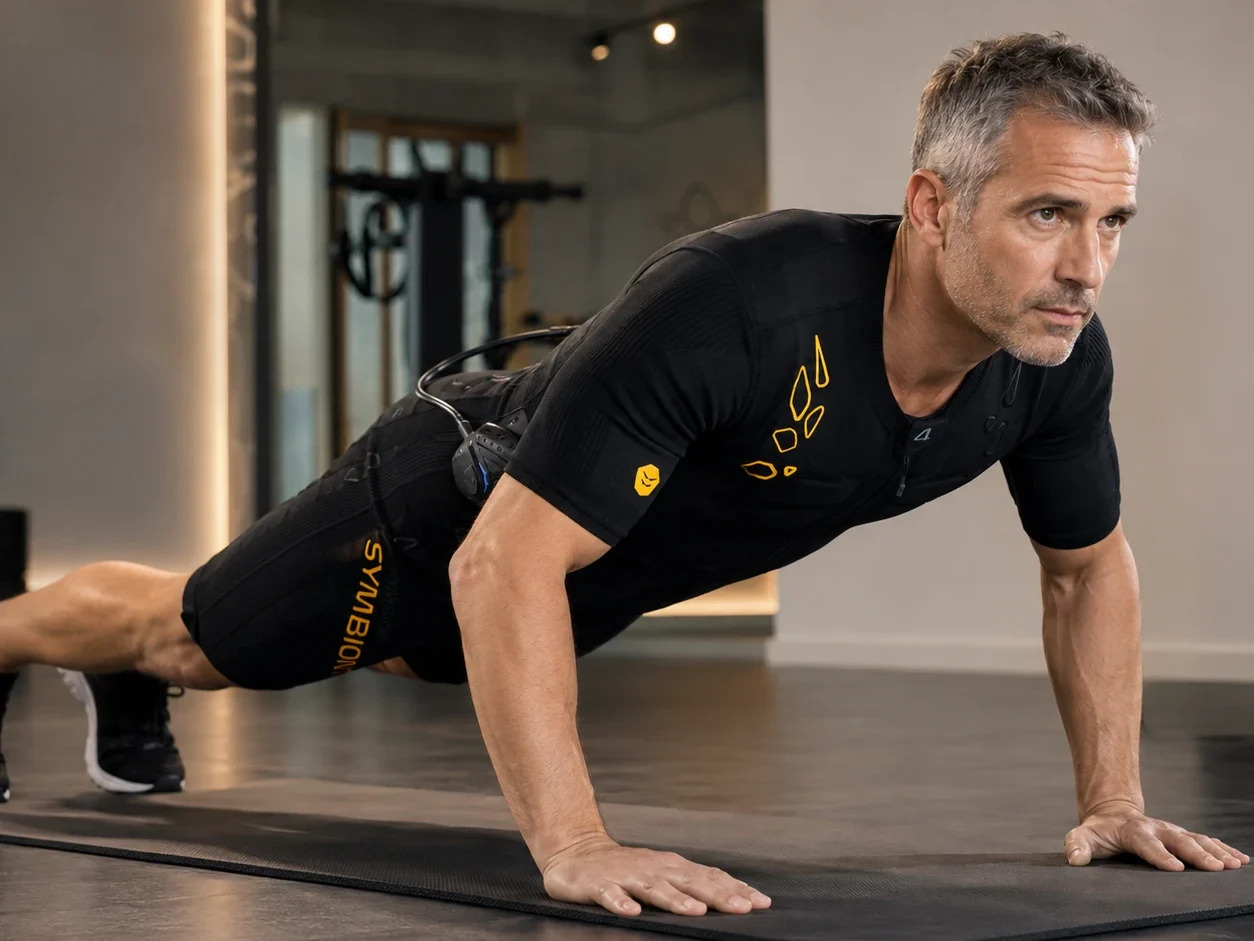
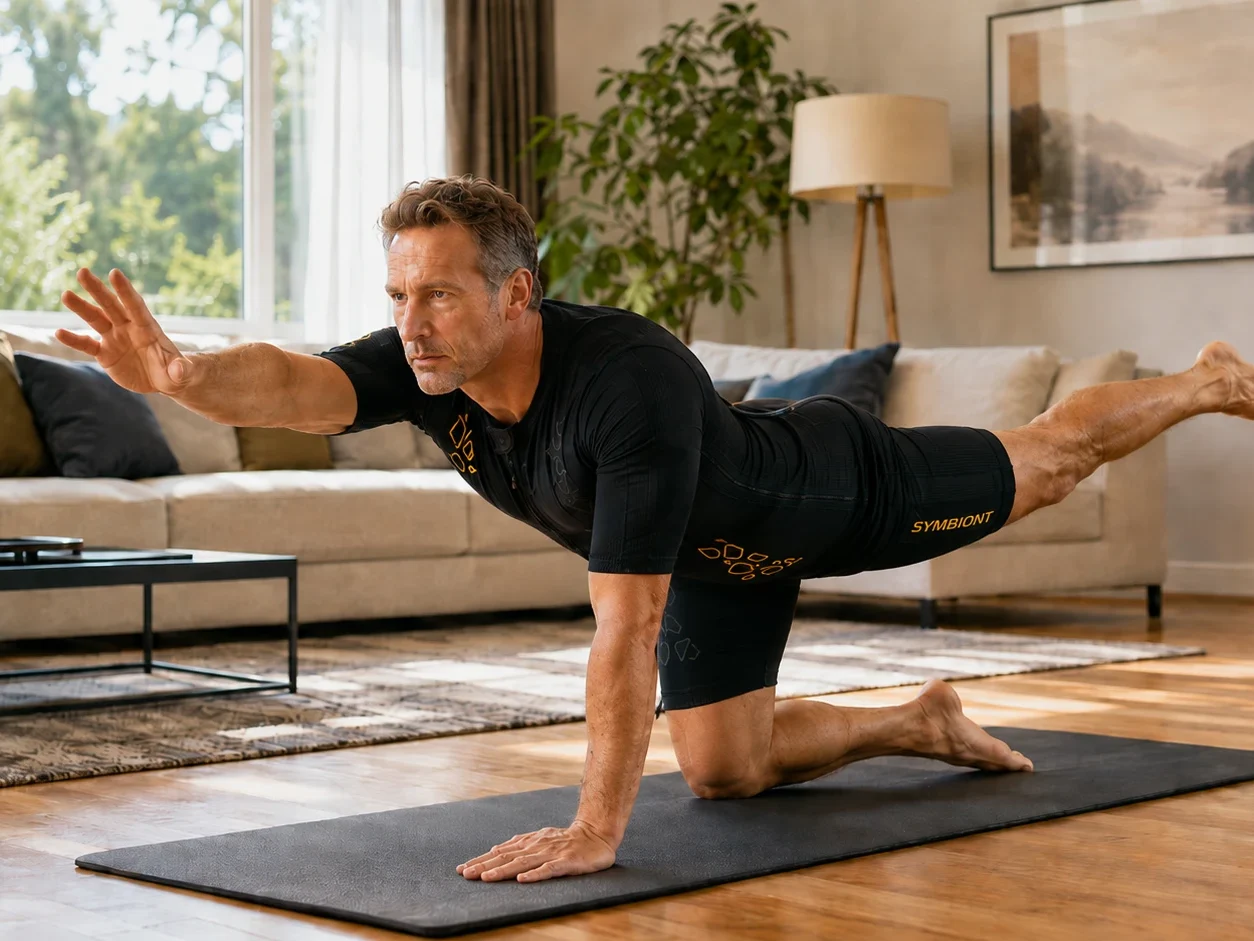
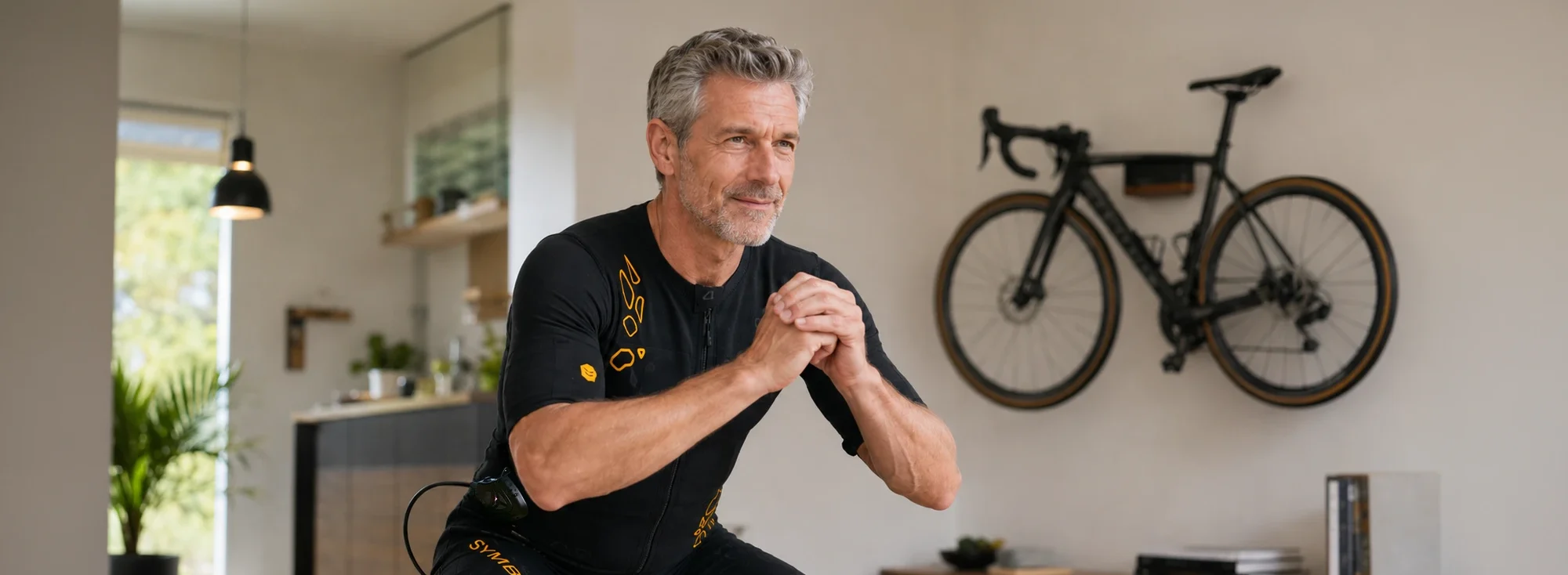
SYMBIONT helps you tackle muscular imbalances head on. By combining EMS training with functional exercises, it activates different muscle groups evenly, correcting the problem at the source. This combination corrects uneven physical demand, improves how movement feels, and builds overall stability – particularly where back pain or posture problems are linked to physical strain.
How do misalignments typically show up?
Misalignments show up across different parts of the body and in your daily activities. Some common examples include:
- permanently raised shoulders
- a rounded back from prolonged sitting
- one-sided strain during sport
- hyperextended knees or elbows
- weak core stability
- uneven movement patterns when walking, standing or training
Compensatory training helps you recognise these patterns and rebalance your body.
Why do muscular imbalances develop?
The body adapts to whatever demands you place on it repeatedly. When the same movements are repeated over and over, some muscle groups develop more strongly than others.
This can be the result of our day-to-day habits or sports that naturally favour one particular side or type of movement – think tennis, golf, horse riding, cycling or sports that involve throwing. In tennis, one side of the body does most of the work. In horse riding, the focus is on stability and core strength, while other kinds of movement get almost no attention. Over time, certain muscles tighten and shorten while others weaken from underuse.
Prolonged sitting and low activity levels can also make these imbalances worse.
How can compensatory training help?
The key is regular, varied movement – done consistently. There’s no single solution, but the right training helps your muscles work more evenly and corrects any imbalances that build up over time. Here’s what tends to make the biggest difference:
Strength training
Building strength helps you bring weaker muscle groups back into balance and develop greater overall stability. The back, abdominal, and gluteal muscles are worth paying particular attention to.
Mobility and flexibility
Yoga, stretching, and dedicated mobility work can all improve your range of motion and release muscles that have either become tight or shortened over time.
Coordination and body awareness
Balance and coordination work helps you move with greater control – and makes you more aware of the patterns your body has fallen into.
Everyday movement
This one is easy to underestimate. Small daily decisions, like taking the stairs instead of the lift or walking rather than driving short distances, keep your body moving in varied ways and help prevent one-sided strain from building up.
What compensatory training focuses on depends on the areas that need to be addressed. For horse riders, the emphasis tends to be on core stability, hip mobility and activating the back and leg muscles. For cyclists, the priority is usually building core stability, releasing tension built up on one side and improving mobility in the hips and lower back.
How does EMS fit into compensatory training?
EMS is commonly used alongside compensatory training because it activates multiple muscle groups at once, including deeper muscles that are harder to reach through conventional exercise. It also helps distribute effort more evenly across the body, giving the core muscles an extra boost in the process.
For people dealing with one-sided strain, EMS can help improve posture, ease back pain, stabilise movement patterns and restore muscular balance.
EMS works best as part of a broader routine. See it as something that complements regular movement, strength training, and recovery rather than as a replacement.
How are back problems and muscular imbalances connected?
Back problems are often where muscular imbalances make themselves felt first. Prolonged sitting, too little movement, weak core muscles, and uneven movement patterns all play a part. And they tend to reinforce each other over time.
Regular, varied movement helps strengthen the muscles that support the back and core. EMS can add to this, particularly in full-body training, where specific programmes can target the back and postural muscles.
SYMBIONT’s EMS slots right into your existing routine – whether you train at home or in the studio. It helps build core tension and gives the back and postural muscles a much-needed boost.
Results take time – and that’s totally normal
In the same way that muscular imbalances don’t develop overnight, they don’t go away quickly either. That’s worth keeping in mind.
Consistency matters more than intensity. Keeping your body moving regularly, giving your muscles variety, and allowing proper recovery time will do more for you than the occasional hard session. You don’t need a hardcore training plan to get started. Small changes to your daily routine add up more than you might think.
Compensatory training: move better, stay stronger
Whether in daily life or sport, asymmetric movement is hard to avoid entirely. That’s why building balance back in through training matters so much. Strength work, mobility exercises, and coordination training can all help reduce muscular imbalances and improve overall stability.
EMS works well alongside this – activating multiple muscle groups at once and adding a boost where it’s needed most. Paired with regular movement and proper recovery, compensatory training can help restore muscular balance and build a more resilient body.