Strengthening your back: how to build stability that lasts
Our backs are involved in almost every movement we make, probably without us even realising. Just by sitting, lifting, turning or walking, a complex system of muscles is at work to keep our body balanced and upright.
Most back problems don’t come from a single injury. It’s often the opposite: too little movement, too much sitting or placing uneven physical demands on our bodies. As we spend more and more of our lives sitting down, spinal health is becoming even more important, and regular exercise can make a real difference. EMS can be useful for back health.
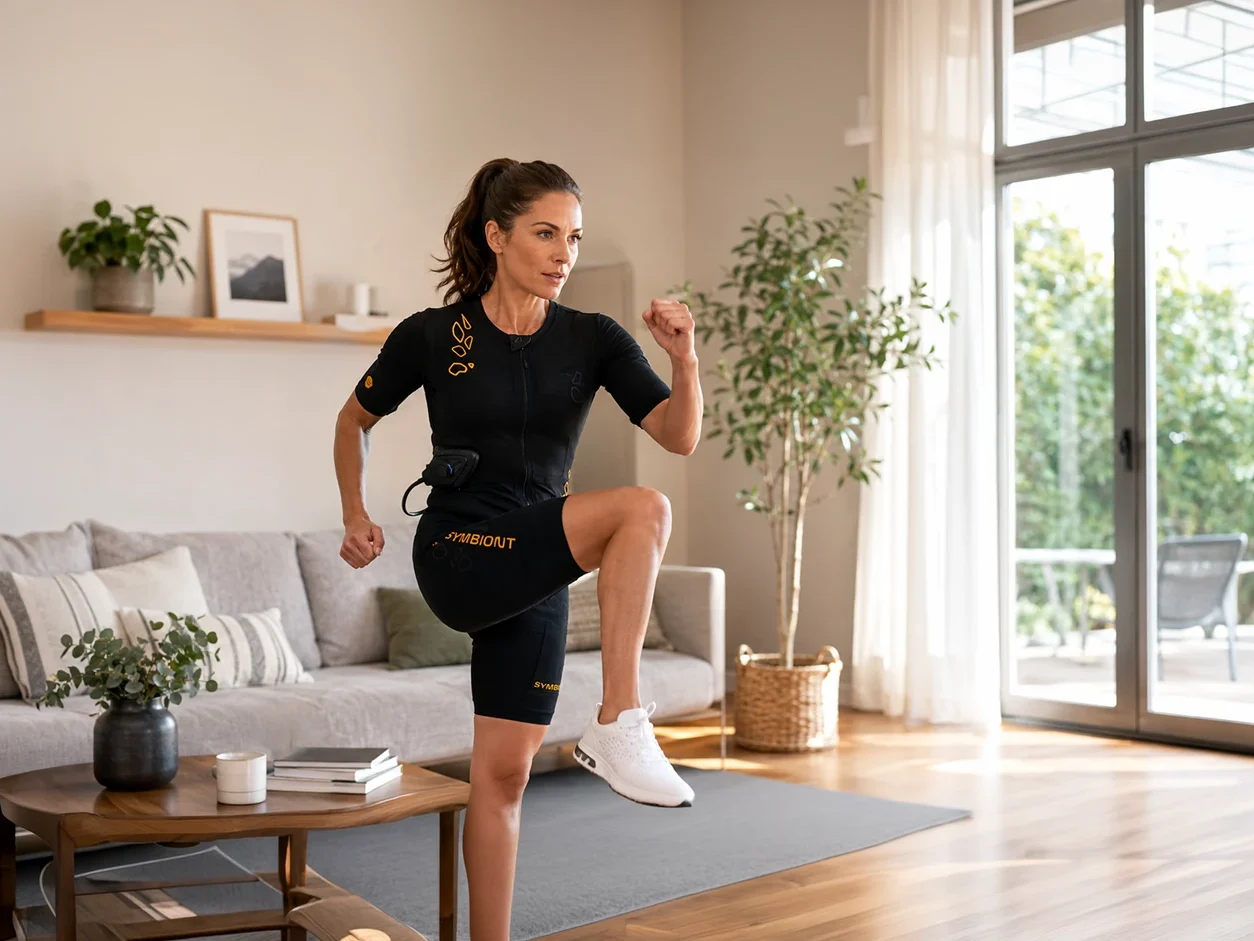
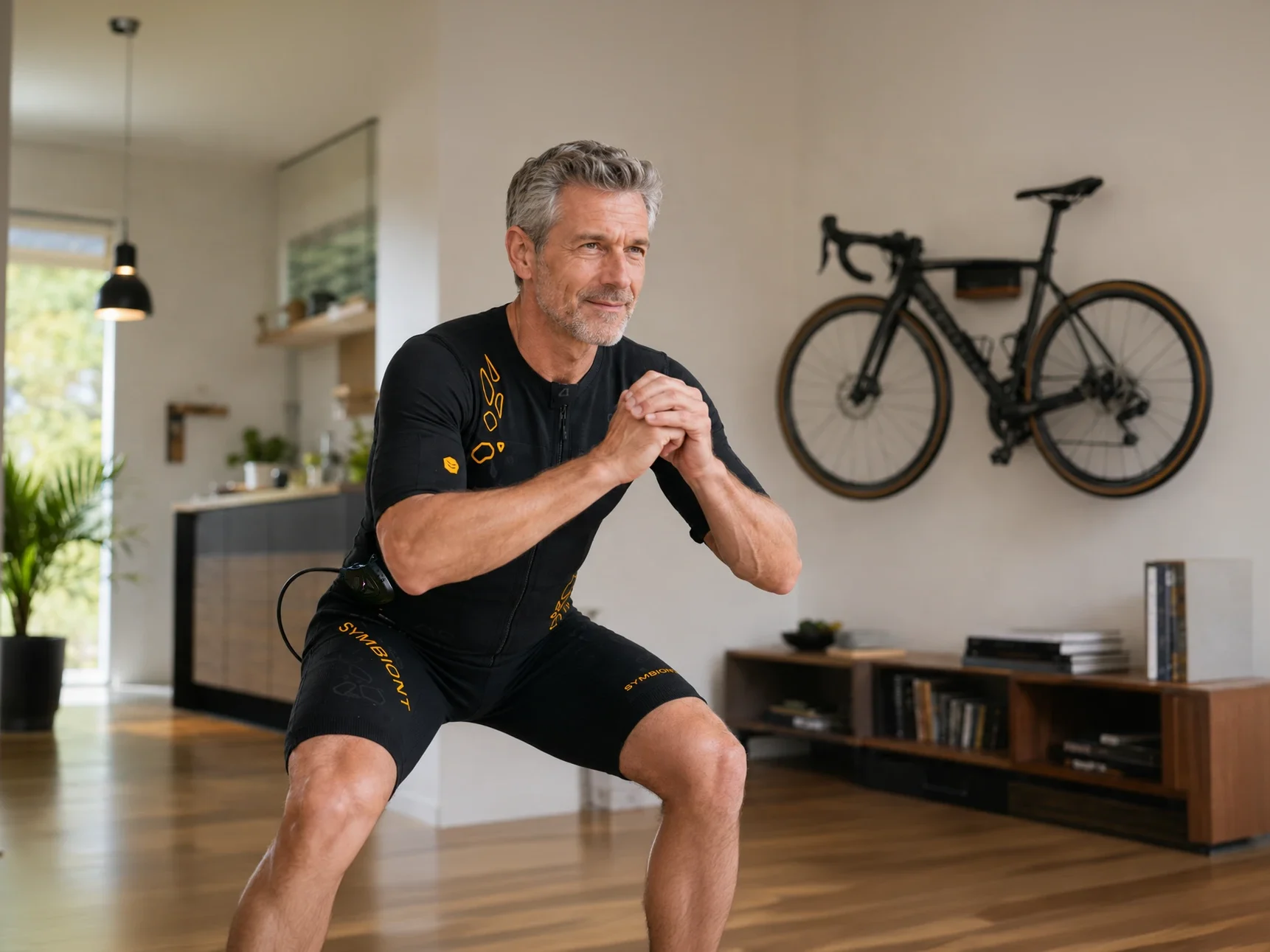
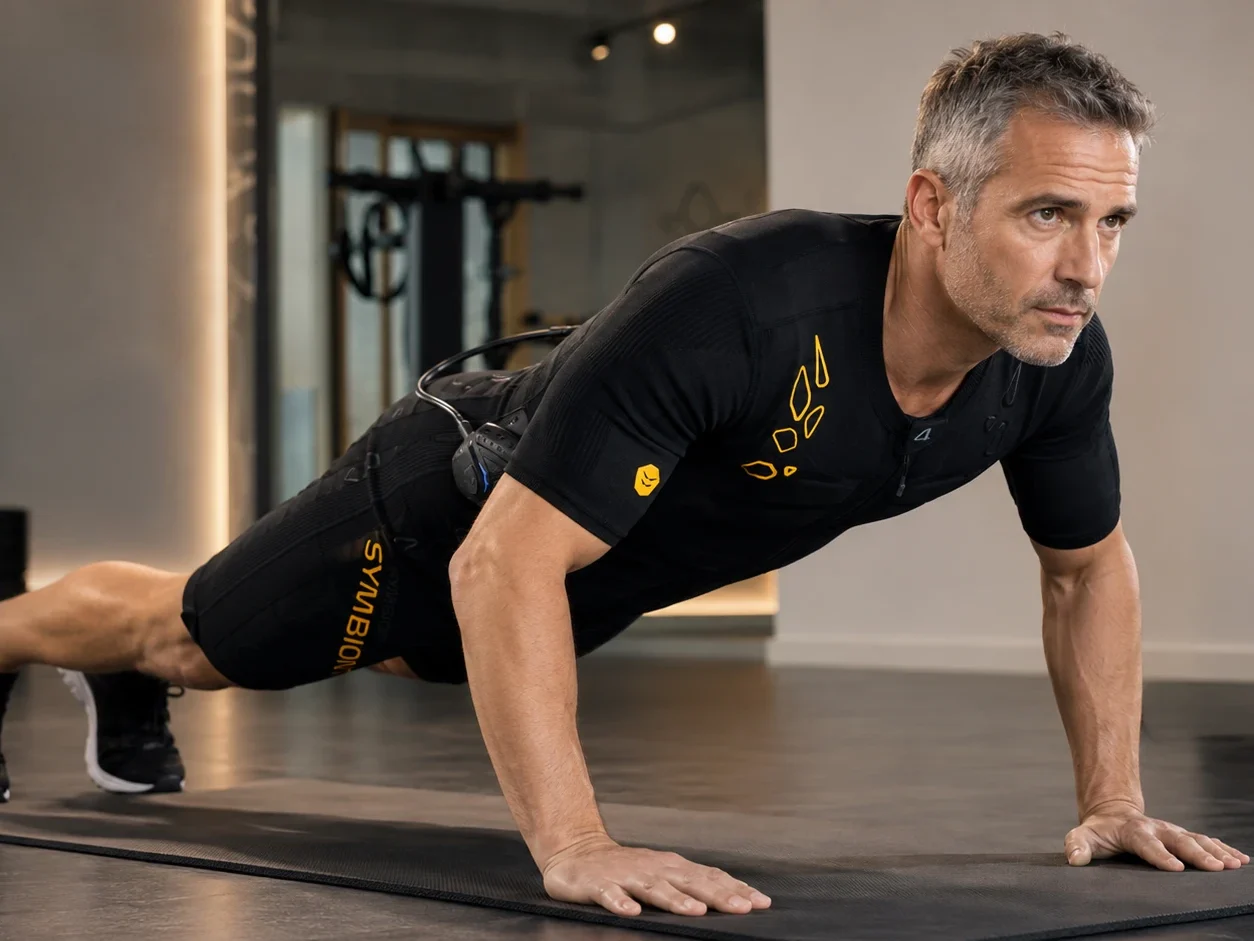
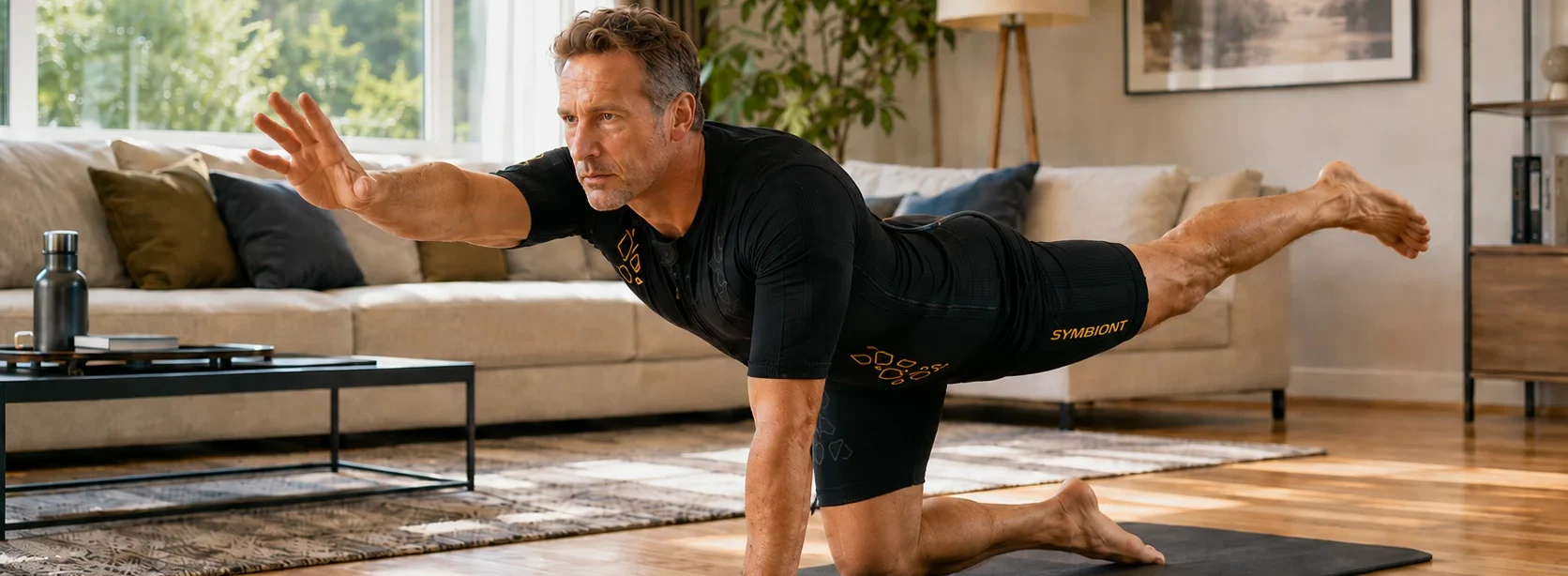
With SYMBIONT EMS, you can target the stabilising muscular groups in your back and core. The additional electrical impulses activate deeper muscles, making EMS a useful addition to conventional back and core training.
Why is it so important to strengthen our back muscles?
Our back muscles aren’t a single muscle, and they don’t all work in the same way. Different muscles are activated depending on how we move, or how we don’t move.
The deepest muscles – the ones running closest to the spine – are also the easiest to overlook. We rarely notice them until they start to weaken, and when they do, the effects show up quickly:
- Sitting for longer stretches of time becomes uncomfortable, be it at a desk or in the car.
- Bending down or standing up feels less controlled, particularly in the lower back.
- Lifting, carrying and turning start to take more effort than they should.
- Posture starts creeping forwards, often without us noticing until it’s a habit.
Which exercises are best for the back?
To strengthen your back muscles, consistency and good technique are key. The back responds well to controlled, repeated movements. The following exercises build stability and strength at the same time:
- Forearm plank: activates the whole core and stabilises the lower back.
- Glute bridge: strengthens the lower back and gluteal muscles.
- Superman: works the back of the body through controlled lifting of the arms and legs.
- Bodyweight or resistance band rows: strengthen the mid and upper back and improve posture.
- Bird dog: builds coordination and stability through the core.
It’s worth bearing in mind that even short sessions of 10 to 20 minutes can strengthen your back muscles effectively provided you do them regularly.
Many people think good posture means consciously sitting up straight. Really, what our back needs most is movement. Our body isn’t made to stay in the same position for hours, even if it’s a healthy one! Make it a habit to sit up straight, lean back or stand up every once in a while. This kind of variety does more for our backs than holding any single correct position.
Core stability: why we need to train our back and abs together
Core stability refers to how well the muscles at the centre of the body – the abdominals, back and glutes, along with the deeper stabilising muscles – work together to control movement. When the core is weak, the body often compensates with poor movement patterns or uneven strain elsewhere.
That’s why our back and abs need to be trained together. If one area is causing problems, it is worth working the other too. Done consistently, training both can mean:
- better, more stable posture
- more controlled movement
- greater strength in everyday tasks
- less uneven strain across the body
- preventing everyday aches and pains
EMS for back muscles
EMS training, short for electrical muscle stimulation, can be a useful addition to back and core workouts. Electrical impulses stimulate muscle groups while you move, allowing it to reach deeper core muscles that conventional exercises sometimes miss. EMS can also add an extra training boost where it’s needed most.
Common uses of EMS for the back and abs include:
- activating the core muscles
- supporting stability work
- complementing conventional training
- easing you into exercise if you’re just getting started
For the back, EMS doesn’t replace a full training program. Rather, it works best alongside one.
SYMBIONT EMS lets you build the stability that matters most for posture, balance, control and of course for a stronger core. Our training system targets the stabilising muscle chains that are key to controlled movement and a solid core. Runners, cyclists, horse riders and athletes who play team sports all benefit, as can anyone dealing with poor stability linked to back pain.
Conclusion: Core stability is built over time
The abdominal, back and gluteal muscles all need to work well together, and that only happens with regular movement. Specific back exercises help, but so do the small choices we make every day: taking the stairs, walking instead of driving, getting up from the desk more often. EMS can complement all of this, particularly when it comes to core stability.
It’s just worth remembering that stability isn’t built in one session. It’s built over time.