


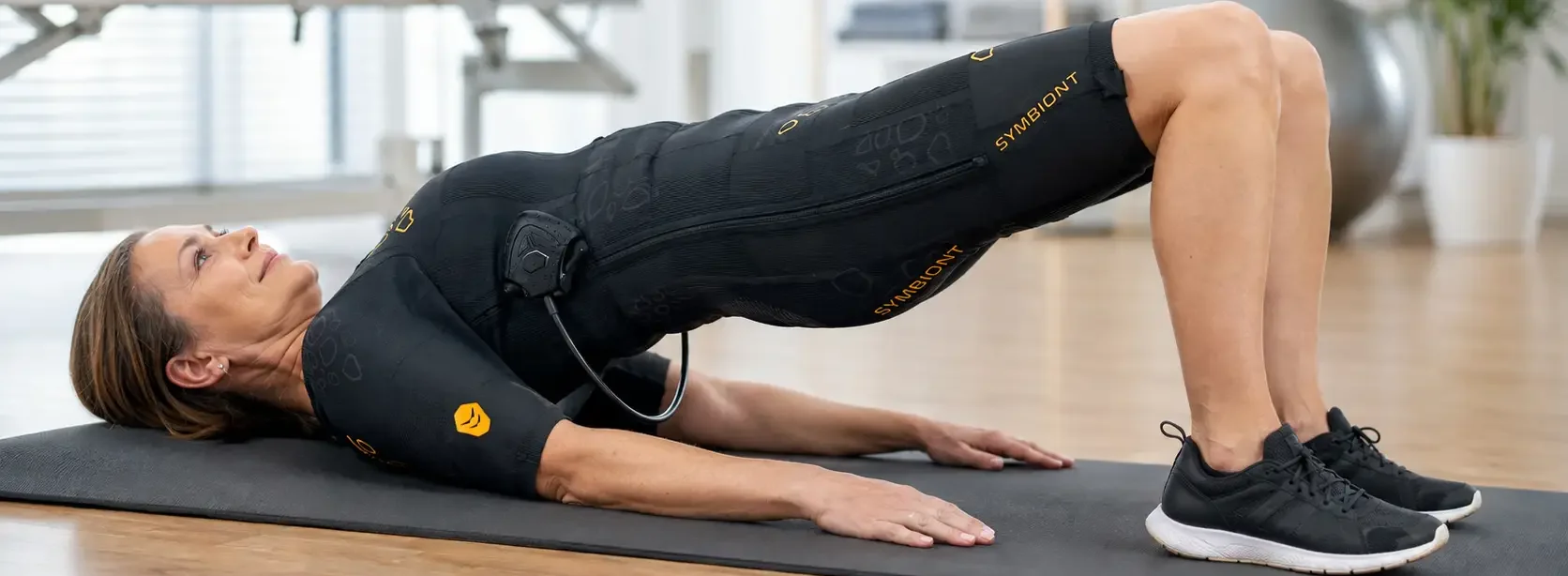

Pelvic floor exercises: why they matter for both men and women
Your pelvic floor is a complex group of muscles that closes off the lower part of your pelvis. It supports your internal organs, especially those in your lower abdomen, and helps keep them in the right position.
At the same time, it plays an important role in everyday movements and bodily functions – supporting your posture and working together with your breathing and core muscles.
One of the most important functions of the pelvic floor muscles is continence. In simple terms, this means they help you control your bladder and bowel so you can decide when to empty them. This is even more important for activities that increase pressure in your abdomen, such as laughing, coughing, lifting something heavy or exercising. In these situations, the pelvic floor needs to react quickly to help prevent leaks.
Most of the time your pelvic floor works without you even noticing it. However, things can change. Many people first become aware of their pelvic floor when they notice a few drops of urine when sneezing, changes in how their body feels after pregnancy or weakness following an operation.
That’s why it’s worth taking care of your pelvic floor before problems arise and working to strengthen it. Pelvic floor exercises are relevant for both women and men and matter at many different stages of life: during and after pregnancy, as you get older, when doing sport or as part of rehabilitation after certain illnesses and medical procedures.
Good health also means feeling confident in your movements, staying active and being able to manage everyday life independently. Your pelvic floor is more involved in this than many people realise. That’s why it deserves attention no matter your age.
What exactly is the pelvic floor?
The pelvic floor consists of several layers of muscle and connective tissue and forms the base of the pelvis. Put simply, you can think of it as a supportive structure stretched between the pubic bone, tailbone and the two sitting bones. They’re the bony points you can feel when sitting on a firm surface.
The anatomy differs slightly between women and men, but the basic structure and key functions are similar:
- The pelvic floor helps control your bladder and bowel and works with your abdominal and back muscles as well as your diaphragm to keep your core stable.
- It also needs to absorb pressure created by actions such as coughing, laughing, lifting or physical activity, so that this pressure is not transferred too strongly to the internal abdominal organs, particularly the bladder and bowel.
Because the pelvic floor is located inside the body and normally does its job automatically, many people find it difficult to consciously activate these muscles. That is why awareness and movement control are just as important in pelvic floor exercises as strengthening the muscles themselves.
Why pelvic floor exercises don’t just matter for women
Pelvic floor exercises are often associated with pregnancy and postnatal recovery. However, that’s only one part of the story. Men also have a pelvic floor, and it plays an important role in continence, stability and quality of life for them too.
That is why it is worth learning how to train your pelvic floor before any problems develop. Targeted pelvic floor exercises can also be useful as a preventative measure. Certain stages of life and situations place particular demands on the pelvic floor:
- Before, during and after pregnancy and birth: During pregnancy, the pelvic floor is exposed to increasing strain, especially as the baby grows and adds more weight. During vaginal birth, strong forces act on the pelvic floor and surrounding structures, which can place additional stress on the muscles and supporting tissue. Possible effects include reduced bladder control or a feeling of pressure or heaviness in the pelvic area.
- As you get older: Over the course of your life, the risk of pelvic floor problems and urinary incontinence can increase as muscles and connective tissue change and generally become weaker.
- After certain pelvic operations: Following prostate surgery, bladder control can temporarily be affected.
- Chronic pressure or strain: Being overweight or having a chronic cough can increase pressure on the pelvic floor. Chronic constipation or frequent heavy lifting have a similar effect since both put extra pressure on the abdomen.
Pelvic floor exercises during pregnancy and after birth
Pregnancy brings many changes to your body. The increasing weight of both the mother and the unborn baby, along with the physical adjustments that take place, also create new demands on the pelvic floor.
Urinary incontinence is relatively common during or after pregnancy. During a vaginal birth, the tissue is exposed to additional strain. This is why targeted pelvic floor exercises can be useful before and during pregnancy. With SYMBIONT EMS, you can activate and strengthen your pelvic floor muscles before pregnancy as part of preventative training, so before any problems occur.
After giving birth, your body needs time to recover. That is why you should adapt your pelvic floor exercise routine to your individual situation. When and how intensively you should train depends, among other things, on how your pregnancy and birth progressed, as well as any injuries or symptoms you may have experienced. If you are unsure, discuss pelvic floor training with your gynaecologist before starting.
Regardless of the situation, postnatal recovery is the focus at the beginning of pelvic floor training after pregnancy. This includes learning to feel your pelvic floor again, consciously activating it and relaxing the muscles in a controlled way.
As your training progresses, you can integrate SYMBIONT EMS into your pelvic floor exercises, for example as part of postnatal recovery or rehabilitation. It can also support work on core strength, stability and the interaction between different muscle groups.
Pelvic floor and incontinence
You may have experienced it before: a few drops of urine escaping when you laugh, cough or move quickly. For some people, however, this is more than an occasional issue and can have a noticeable impact on everyday life.
Urinary incontinence affects both women and men and becomes more common with age. The most frequent types include:
- Stress incontinence: Urine leaks involuntarily when pressure in the abdomen increases, for example when coughing, sneezing, laughing, lifting, jumping or exercising.
- Urge incontinence: A sudden, strong urge to urinate occurs and urine leaks before you can reach the toilet.
- Mixed incontinence: Stress and urge incontinence occurring together.
The role of the pelvic floor depends on the type and cause of incontinence. However, it is important to remember that not every form of incontinence is automatically caused by a weak pelvic floor. Symptoms can have many different causes, which should always be checked by a medical professional.
How can you train your pelvic floor?
The first step is to develop an awareness of these muscles. When you contract your pelvic floor, it should feel roughly like you are trying to stop both urine and bowel gas while gently drawing the muscles upwards and inwards.
Stopping your urine flow deliberately can help you identify the right muscles once, but it should not become a regular exercise.
An effective pelvic floor exercise routine instead combines conscious activation with total relaxation and calm breathing. Start the exercises lying down and then practise them while sitting, standing or even during everyday movements.
Try to keep your abdomen, buttocks or legs relaxed throughout the exercises and remember to breathe normally. How many repetitions you should do and how long you should hold each contraction for depends on your starting point and your training goal.
If you experience any symptoms, individual support at your local Competence Centre can help you find the right approach instead of relying on a general training plan.
Pelvic floor exercises for everyday life
You can also support your pelvic floor and use it more consciously in everyday situations:
- Breathe out when lifting and keep heavy objects close to your body
- Activate your pelvic floor muscles consciously when coughing or sneezing
- Sit and walk upright to help maintain tension in your pelvic floor muscles
- Avoid regularly holding your breath or straining forcefully
- Learn to distinguish between tension and complete relaxation
- Make training part of your everyday routine instead of only doing occasional intensive sessions
Remember that consistency matters more than perfection. Like any other muscle in your body, your pelvic floor changes through regular repetition, not through a single exercise.
Once you have built and strengthened the muscles, you need to keep training them to maintain their function. That is why it is a good idea to make pelvic floor exercises a regular part of your everyday routine.
What role can EMS play in pelvic floor exercises?
A strong and well-functioning pelvic floor is important for continence, stability and feeling secure in everyday life. That is why training your pelvic floor can be useful in many different situations: as a preventative measure to strengthen the muscles and maintain their function over time, or as part of rehabilitation when rebuilding strength and control.
SYMBIONT EMS can help activate and strengthen the pelvic floor muscles. As a medically grounded EMS solution, it can be used in rehabilitation, preventative care and functional training.
This means you can use pelvic floor EMS with SYMBIONT, for example, as a preventative measure before symptoms appear, or as a complementary part of professionally supported recovery after pregnancy, illness or certain medical procedures.
The aim is to maintain physical function for as long as possible or regain it during rehabilitation, supporting independence, activity and overall wellbeing.
If you experience incontinence, have had an operation or have other medical symptoms, you should first speak to a healthcare professional to clarify the cause and find out which type of training is suitable, with or without EMS. SYMBIONT EMS is not intended for use during pregnancy.
Conclusion: A strong pelvic floor starts with body awareness
Compared with many other muscle groups, the pelvic floor is relatively small. However, it plays a major role in everyday life, movement and independence. It also affects men as well as women.
Whether during pregnancy and postnatal recovery, as you get older or after prostate surgery, there are many different reasons why you might decide to focus on your pelvic floor. The important thing is to take an active approach to these changes: pelvic floor exercises can help you improve body control, strengthen long-term function and support your quality of life.
Depending on your situation, professional guidance may be helpful – especially if you have certain symptoms with an unclear cause, in which case you should always seek professional medical advice. Once that’s been clarified, you can incorporate other exercises into your wider routine.
FAQ
Are pelvic floor exercises useful for men too?
Yes. Men also have a pelvic floor, which helps control the bladder and bowel, among other functions. Pelvic floor exercises for men are often used in rehabilitation after prostate surgery.
Do pelvic floor exercises help with incontinence?
This depends on the type and cause of the incontinence. For women with stress or mixed incontinence, targeted pelvic floor exercises are among the recommended first treatment options. They can also be helpful for men after prostate surgery. However, symptoms should always be medically assessed first.
How often should you train your pelvic floor?
The most important thing is to train regularly and perform the exercises correctly. However, there is no single routine that works for everyone. If you have incontinence, structured training programmes over several months are often used. If you find it difficult to identify your pelvic floor muscles or you experience symptoms, guidance from a physiotherapist can be helpful.
Can pelvic floor EMS replace targeted pelvic floor exercises?
No. SYMBIONT EMS can complement muscle training and active movement, but it does not replace consciously contracting and relaxing your pelvic floor or targeted physiotherapy when symptoms are present.
Are pelvic floor exercises useful in early pregnancy?
Yes, pelvic floor exercises can be useful in early pregnancy. However, they should be performed without EMS or electrical impulses. The focus should be on developing awareness of the muscles and learning how to consciously contract and relax them. SYMBIONT EMS, as well as other forms of electrical therapy, is not intended for use during pregnancy.