


Boost your metabolism: how movement and muscular activity help your body
Your metabolism is not a single process. It is a complex network of processes that affect how your body uses energy. People often talk about metabolism in relation to weight loss, energy levels or a more toned body.
If you want to support your metabolism, the focus should be on regular movement, muscle activity and healthy daily habits. This is where exercise and complementary training methods such as EMS can play a role.
What does metabolism actually mean?
Metabolism describes all the processes your body uses to convert and use energy. This includes:
- processing food
- supplying the muscles with energy
- repairing tissue
- storing and using energy reserves
How active your metabolism is depends on several factors. Your genes matter, but so do sex, age, hormones, sleep, nutrition, movement and, above all, activating your muscles.
One thing is important to know: muscles need energy not only during training, but also at rest. When you use your muscles regularly, your body’s energy needs increase. This is why physical activity plays such an important role in supporting your metabolism.
What helps boost metabolism?
When people think about stimulating metabolism, they often think of specific foods or short-term diets. In reality, the biggest difference usually comes from basic habits that affect how much energy your body uses.
The most important habits include:
Regular movement: when you move regularly, you activate your whole musculoskeletal system. Even walking, taking the stairs or doing short workouts increases how much your muscles work during the day.
Strength training: your muscles need energy continuously. Regular strength training can therefore influence your metabolism and increase your body’s energy needs.
Enough sleep: sleep affects different hormonal processes in the body. A lack of sleep can make it harder to train effectively.
Balanced nutrition: eating too few calories can cause the body to conserve energy. Regular, balanced meals help support normal metabolic processes.
Consistency matters more than intensity: single intense measures are less effective than regular habits because your body responds to repeated stimuli over time.
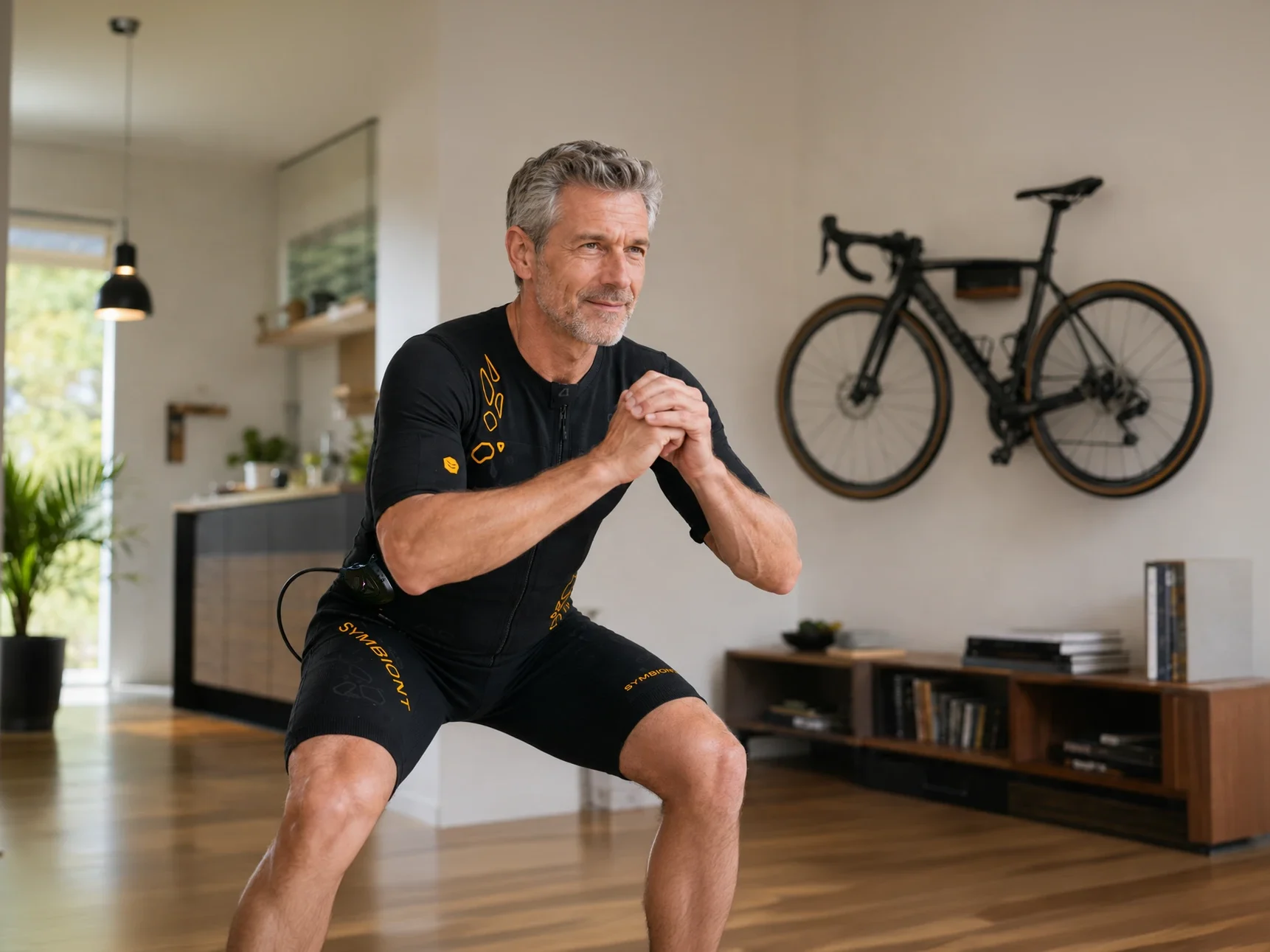
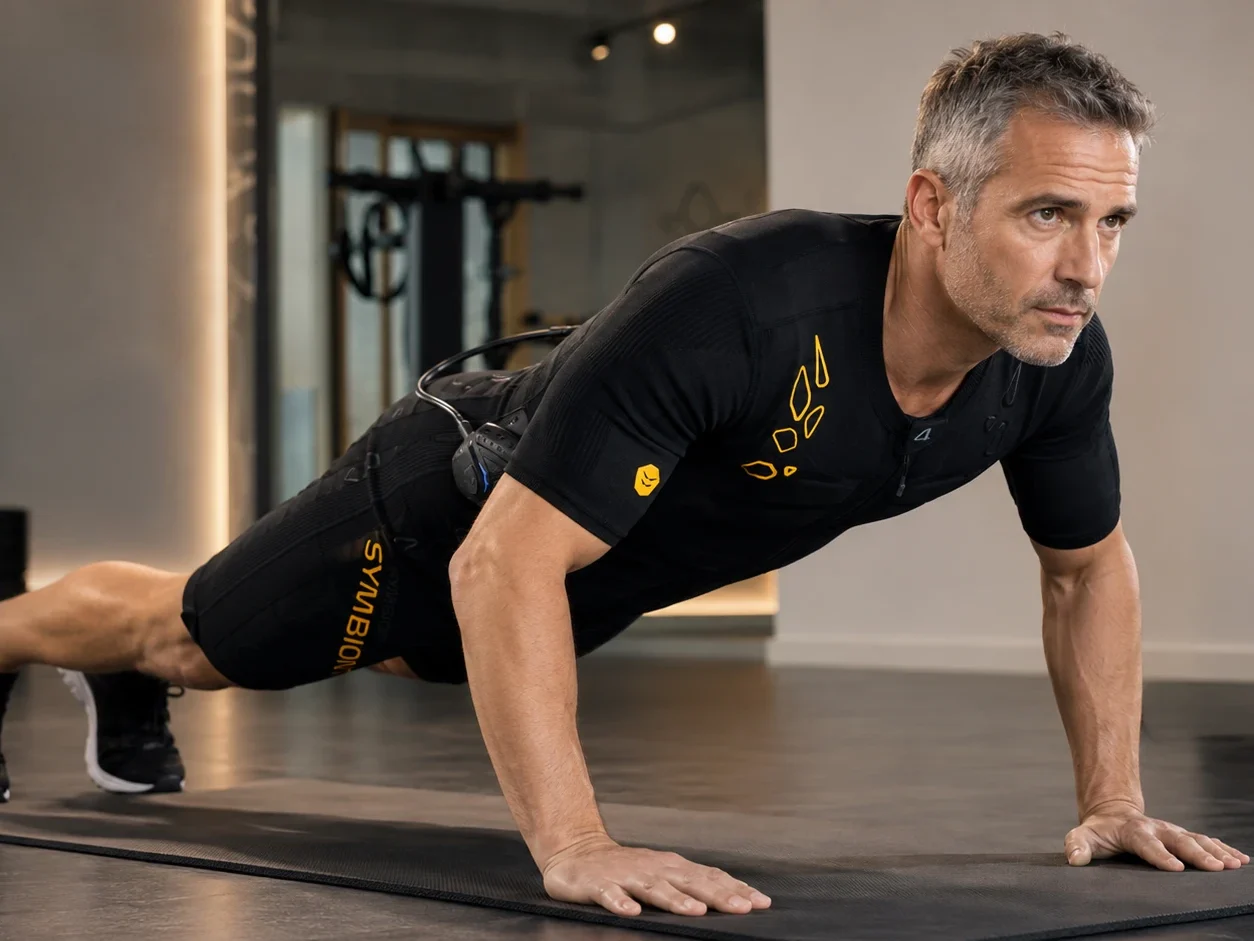
At SYMBIONT, different EMS programs are designed to activate the muscles, support circulation and stimulate metabolic processes. This can support weight management, tone muscle, and help you feel more energized.
Can you train your metabolism to burn fat?
In short: no, you cannot simply switch your metabolism to fat burning. Your body uses different energy sources, including carbohydrates and fat reserves. Which sources it uses, and how much of each, depends on several factors, including the type of training and your overall energy needs.
When you move and train regularly, your body can become more efficient at supplying energy. The key point is that fat burning is not a switch that suddenly turns on. It is an ongoing process that you can support through movement, muscular activity and regular daily habits.
Can you lose weight with EMS training?
EMS stands for electrical muscle stimulation. During movement, electrical impulses activate additional muscle fibers. The aim is to activate several muscle groups at the same time and add extra training stimuli.
People with little time often consider EMS training for weight loss because the sessions are relatively short and involve the whole body.
EMS can be used for:
- additional full-body training
- activating large muscle groups
- supporting classic strength exercises
- helping you get started with regular exercise
What matters is clear: EMS does not replace daily movement or a balanced diet. Instead, it can be one part of a training routine that you can maintain over time.
SYMBIONT develops EMS further by bringing training, therapy and support together in one integrated solution: in the studio, in physical therapy settings and in everyday life. SYMBIONT EMS technology is medically certified and used as part of a broader, sustainable health concept.
How EMS can support muscle tone
Many people do not only associate training with changes in weight, but also want their body to be more toned. The goal is often to improve the body’s appearance or reduce cellulite.
It is important to stay realistic here. Cellulite is common and nothing unusual. How visible it is depends on several factors, including connective tissue, skin structure, genetics and muscle tone. Regular movement and strength training can still help your body look and feel more toned overall.
EMS is often used as an additional tool in this context, especially as part of full-body training. Different programs can support metabolism and circulation while helping improve muscle tone. This can contribute to a more toned body and a feeling of being more energized.
Daily movement still matters
Training alone is often not enough if you spend the rest of the day sitting. Regular movement outside your workouts makes a big difference.
Even small changes can help:
- standing up more often
- walking short distances
- taking the stairs instead of the lift
- changing sitting positions regularly
- consciously building movement into your routine
Over time, these small, regular stimuli can make a real difference.
Many people want to boost their metabolism as quickly as possible. In reality, the body responds best to habits built over time. Regular movement, enough recovery and consistent muscle activity matter more than short-term measures or individual trends.
Conclusion: supporting your metabolism starts with staying active
If you want to support your metabolism, regular movement, recovery phases, muscular activity and consistency matter most. The body adapts to what happens repeatedly, not to isolated short-term measures.
Strength training, daily movement and complementary methods such as EMS can help you stay active and target specific muscle groups.