


fithera 2026: New perspectives for EMS in physiotherapy
What role can EMS play in therapy, rehabilitation, prevention and long-term health management? At fithera in Offenbach we discussed these topics extensively with physiotherapists and practice owners.
Their response far exceeded our expectations. The focus of many of the conversations was less on whether EMS can be used in physiotherapy, but rather how.
After all, EMS is a proven technique and a range of studies and practical experience demonstrate its effectiveness and wide range of applications. Moreover, physiotherapists, with their knowledge of movement, muscle function and individual physical conditions, possess the expertise to use EMS in a targeted and differentiated manner.
Differentiated applications for different objectives
When using EMS, the frequency, intensity, pulse sequence and pulse width can be controlled precisely. This allows different physiological adaptations to be targeted and the stimulation to be tailored to differing objectives and patient groups.
This is what creates exciting possibilities for physiotherapy. We discussed, among other things, applications for movement restrictions, muscular imbalances and sarcopenia, as well as perspectives on rehabilitation and prevention.
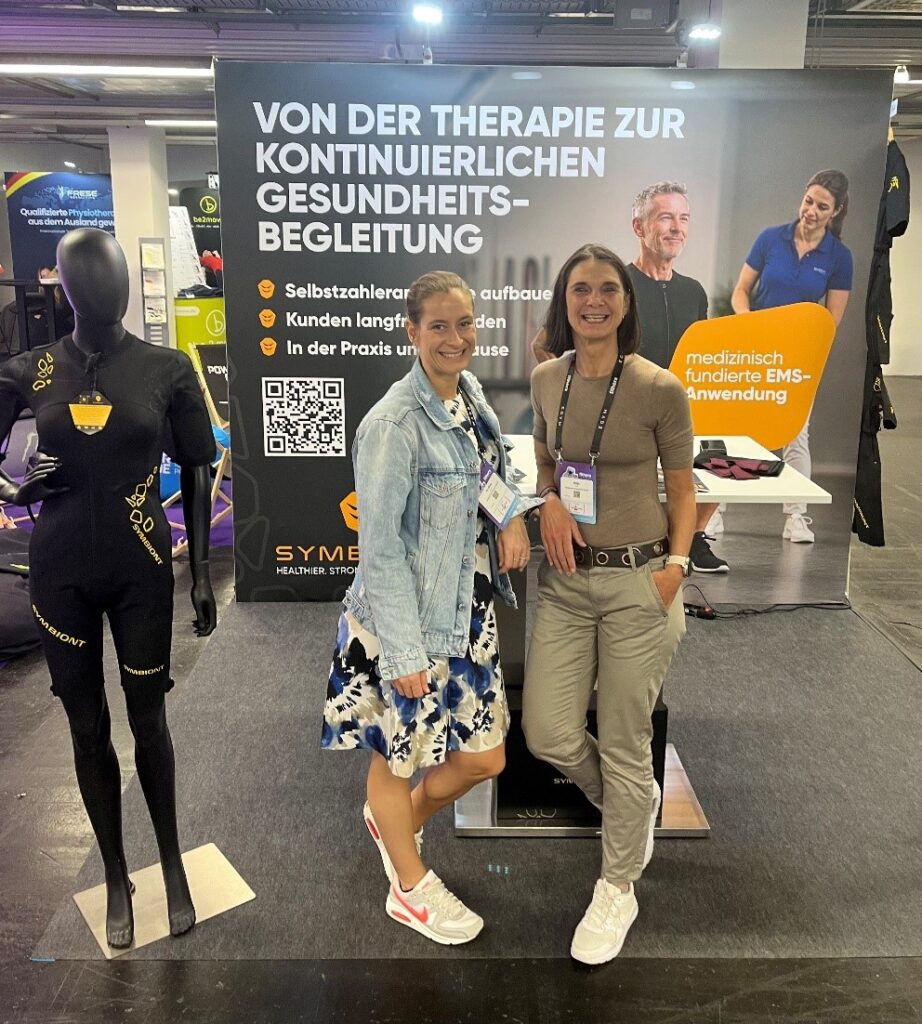
Rethinking therapy
One question came up repeatedly: How can patients continue to be supported after therapy?
This question is particularly relevant in light of the shortage of skilled professionals and the economic pressures that affect many physiotherapy practices. That’s why many practice owners are looking for reliable ways to offer patients additional services.
This is where EMS can serve as a bridge – from therapy through rehabilitation and prevention to long-term health support. This can also lead to new self-payer offerings that align with the professional standards of a physiotherapy practice.
A medical device that meets therapeutic requirements
Another important point in many of the discussions was the professional and medical requirements for EMS applications. Of particular relevance to physiotherapists and practice owners is the fact that SYMBIONT is a medical device.
After all, those who use EMS in a therapeutic setting place high demands on quality, the device’s intended purpose and professional application. SYMBIONT was developed specifically for this environment.
Shaping the future of EMS together
fithera made it clear that there are many concrete and differentiated questions related to EMS in physiotherapy: Which application is suitable for which objective? What are the patient groups for which meaningful application is possible? How can EMS be integrated into existing treatment plans? And how can offerings be created that support people in their ongoing health development, even after therapy?
In our opinion, this is precisely where the value of exchanging ideas at the trade show lies. We have taken away a lot of professional insights, new contacts and concrete starting points and we want to continue these conversations – and develop the role that EMS can play in therapy, rehabilitation, prevention and long-term health support together with physiotherapists and practice owners.