2nd SYMBIONT Day 2026 in Bonn: Shaping the future of EMS together
How is professional EMS developing? What role do studio concepts, training management, measurable results and hybrid applications play? And what do studio operators need to ensure that new approaches work in everyday practice?
These questions were the focus of the 2nd SYMBIONT Day, which took place on 15 August 2026 at the Kameha Grand Hotel in Bonn. They were discussed not only on stage, but also during presentations, Q&A sessions and personal conversations, where the focus was always on how professional EMS can continue to develop in a meaningful way.
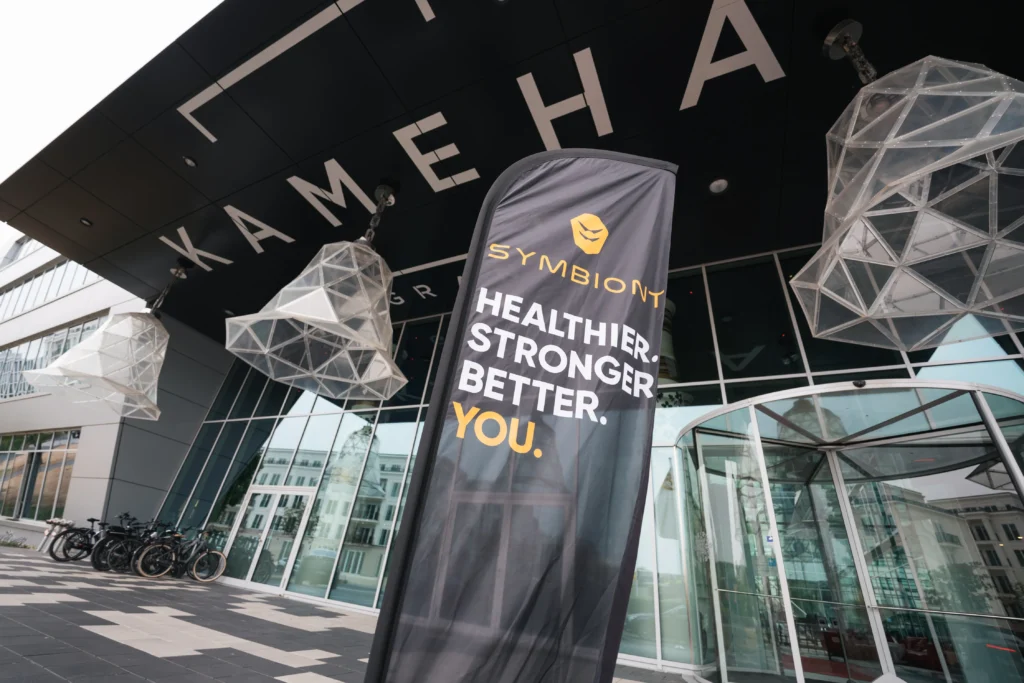
After the first SYMBIONT Day in Hamburg in April 2026, the Bonn event once again created a space for exchanging ideas, sharing experiences and rethinking EMS.
The discussions highlighted one key point: successful EMS is not just about the technology. It is also about creating effective training concepts, making progress measurable and integrating the service into customers’ everyday lives.

Open exchange and shared perspectives
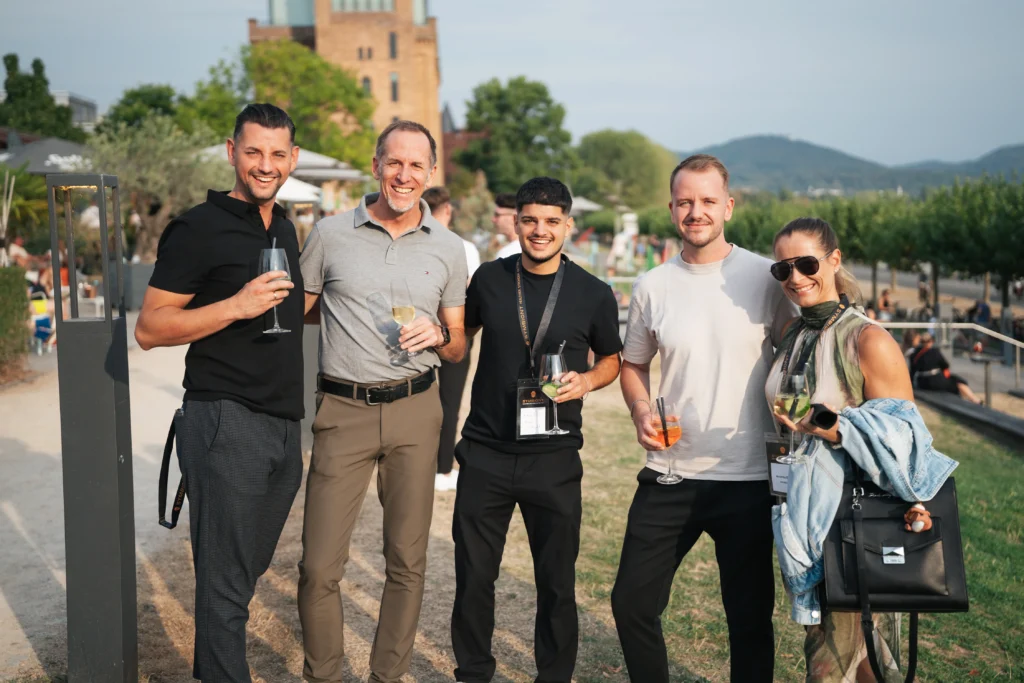
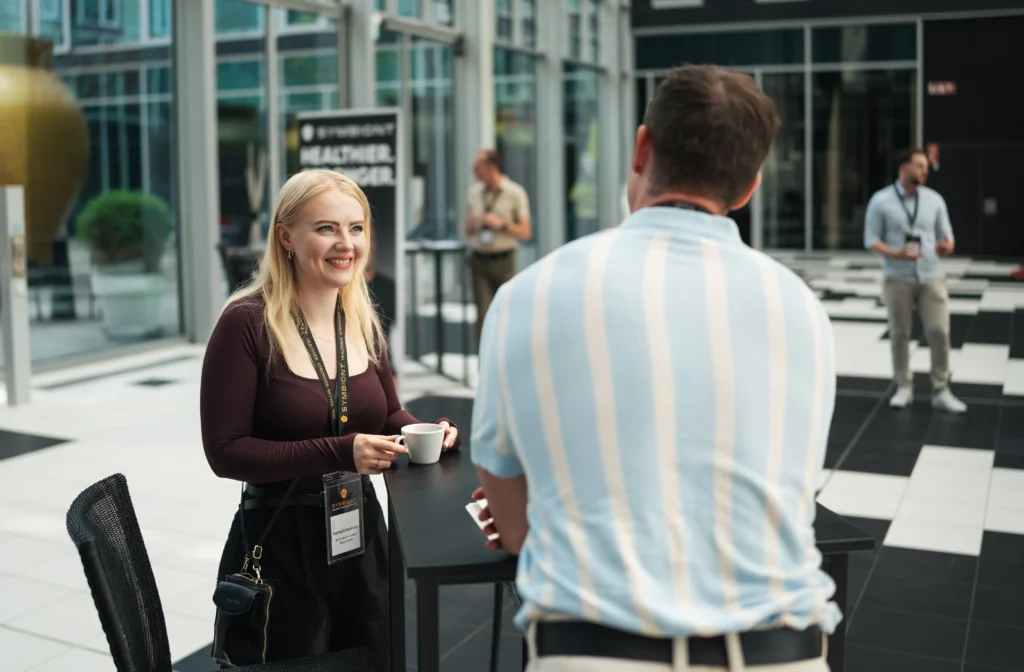
Before the official programme began, the welcome event provided an opportunity for personal conversations and exchange. Many participants already knew each other from the industry, while others had their first experience with SYMBIONT or wanted to learn more about the possibilities of modern EMS applications.
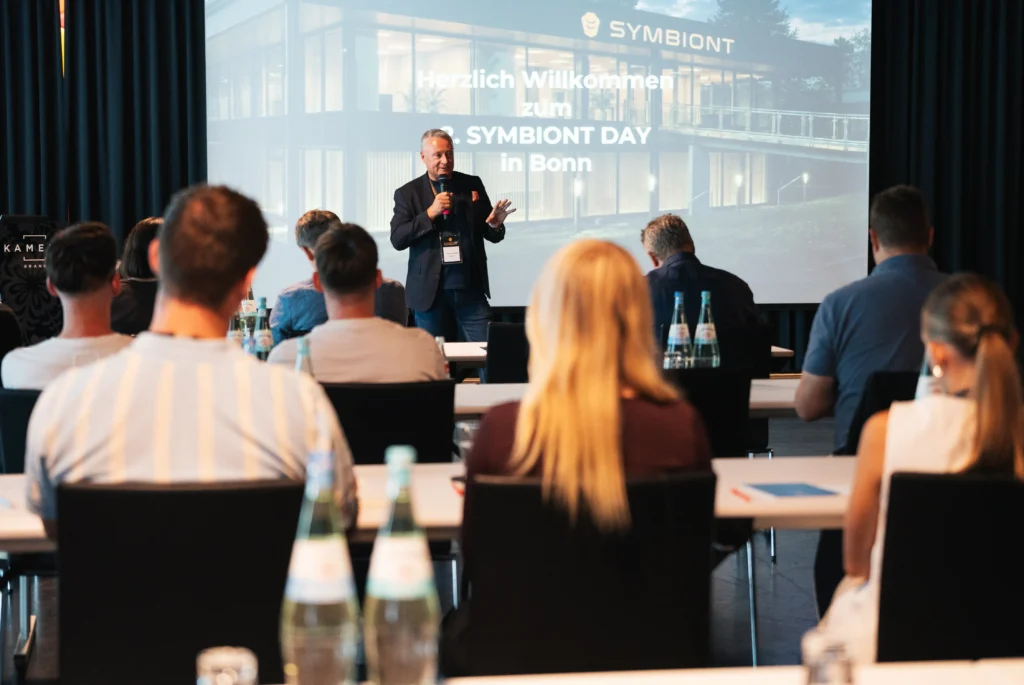
To officially open the event, Andreas Hubert, Managing Director of SYMBIONT, shared his thoughts on the day ahead. He highlighted the importance of direct dialogue with the people who work with EMS in studios every day. Participants were encouraged to share their experiences, ask questions and provide honest feedback throughout the event.
This approach shaped the entire programme: presentations provided inspiration, followed by time for questions, different perspectives and open discussions. Many topics were not only discussed on stage but continued through conversations between participants. The day concluded with a joint expert panel featuring the speakers.
From individual training sessions to a complete EMS concept
Elora Born and Christian Niederfeilner from SUPERNOVA Fitness provided a particularly practical perspective on everyday studio operations. Their keynote was titled “From training to system – rethinking EMS”.
Their key message was clear: differentiation does not come from a single application, but from the overall concept behind it.
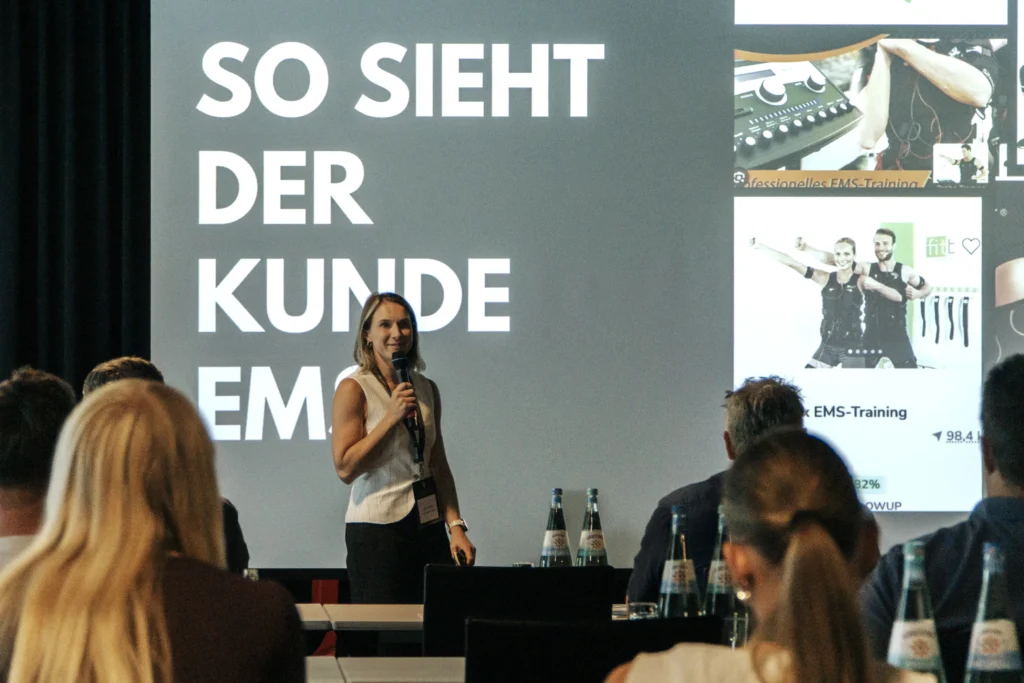
For a successful offering, technology alone is not enough. Instead, positioning, target groups, processes and different services all need to work together. Rather than seeing EMS as a standalone product, it should become part of a wider concept built around customers’ specific needs.
The two speakers also shared practical insights into how they put these ideas into practice in their Berlin studio. This real-world perspective led to many questions from the audience, covering topics from daily studio operations and process improvements to business efficiency and the technology behind their approach.
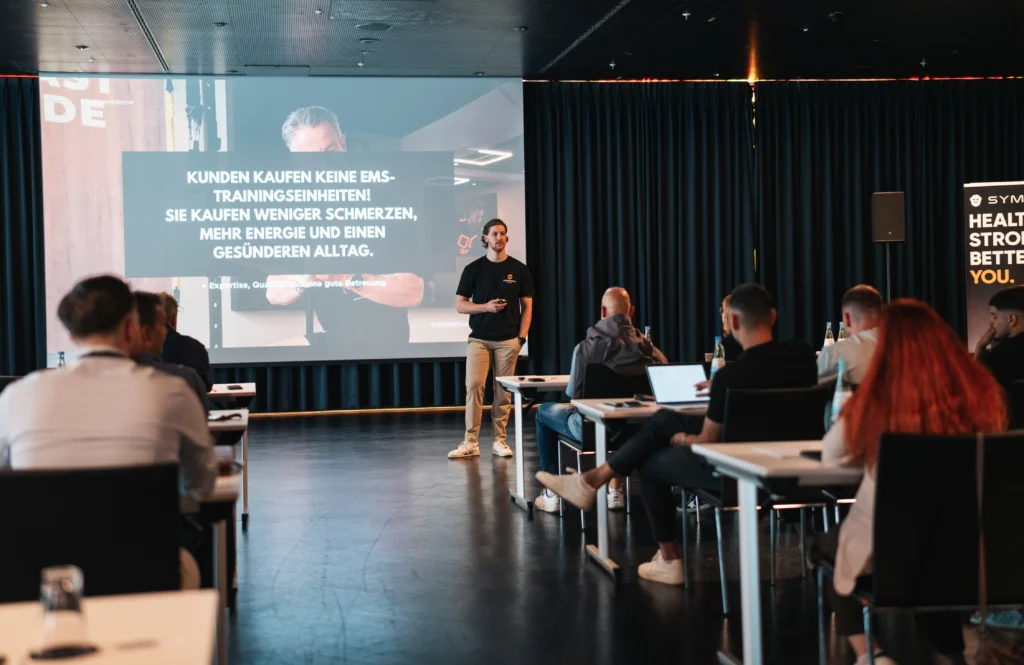
If you would like to find out how SUPERNOVA implemented its studio concept with SYMBIONT, you can explore the SYMBIONT success story featuring SUPERNOVA.
Rethinking EMS and moving beyond fixed routines
Thomas Ott, sports scientist and performance coach, offered a different perspective with his keynote “Rethinking EMS – From rehabilitation to competitive sport”.
In his presentation, Ott questioned a formula that is widely established in the EMS market: Does professional EMS always have to follow the same 20-minute routine?
His approach was more differentiated. EMS is a tool that needs to be used purposefully and adapted to the needs of each target group. A short session can provide an effective training stimulus and complement existing movement and exercise. However, it does not replace other forms of physical activity or an active lifestyle.
For everyday studio operations, Ott highlighted several areas to consider. Instead of structuring every session in exactly the same way, elements such as warm-up, main exercises and cool-down could be adapted more clearly, while interval lengths could be adjusted to match the individual training goal. In his view, regularly adjusting intensity and carrying out shorter, continuous measurements can also help create a more structured approach to managing training.
Ott emphasised that the aim is not to create another fixed blueprint, but to make EMS more targeted and evidence-based from a sports science perspective.
Making muscle activity visible with EMG
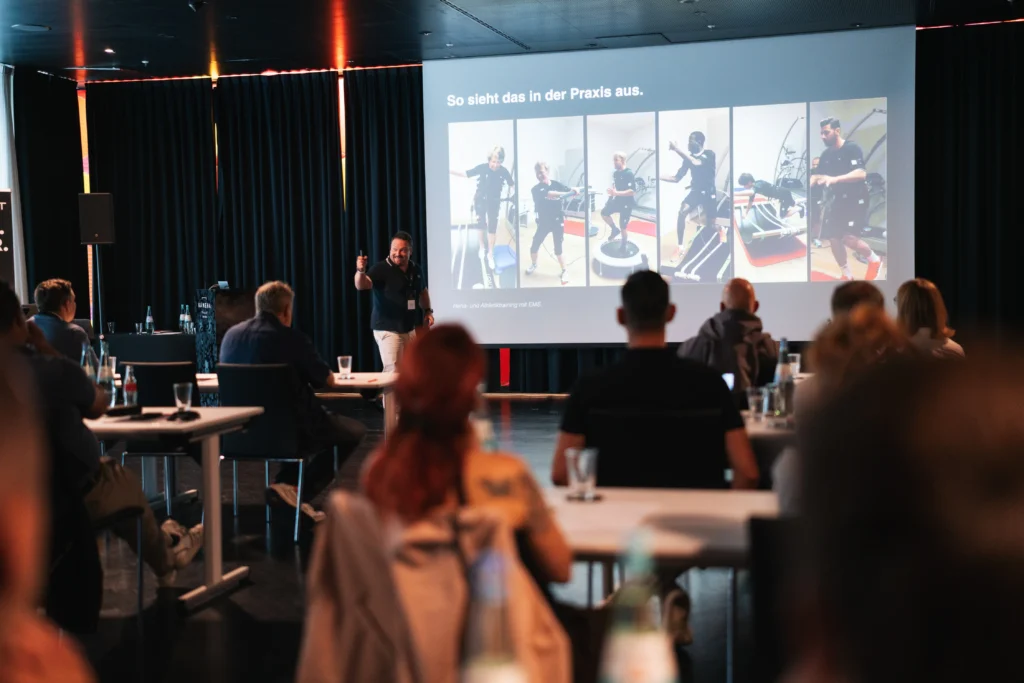
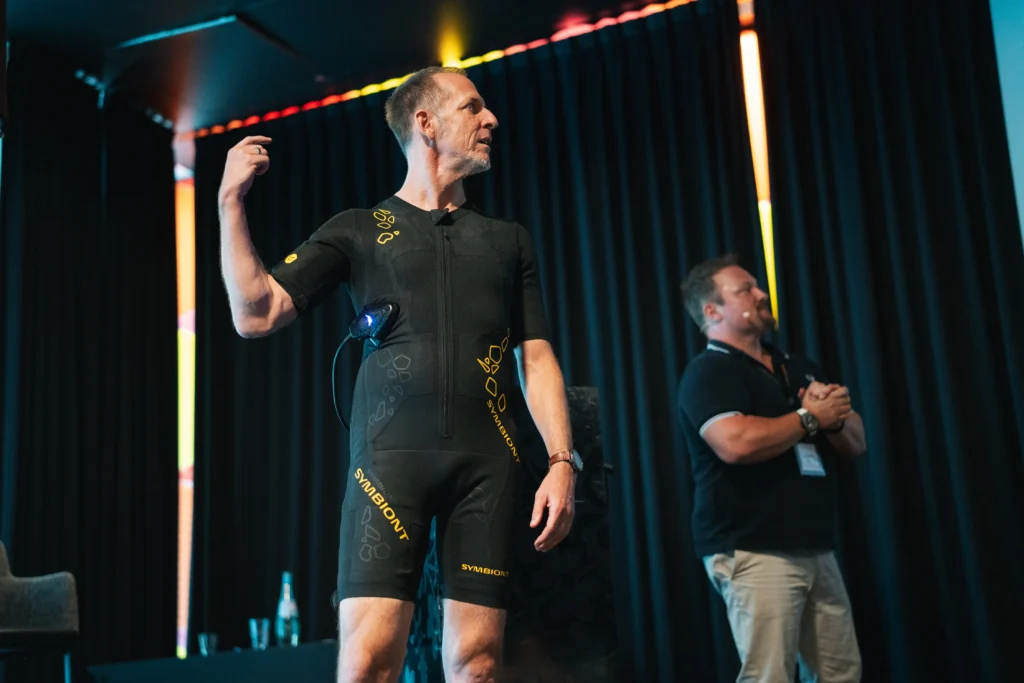
A live demonstration showed how measurement can be used in practice. Using EMG measurements, participants were able to see how muscle activity changed when different muscle groups were consciously activated.
The demonstration highlighted how this type of data can provide additional insights for professional training support. Muscle activity can be measured and tracked, allowing these insights to be used when analysing and adapting training.
Hybrid training and professional support beyond the studio
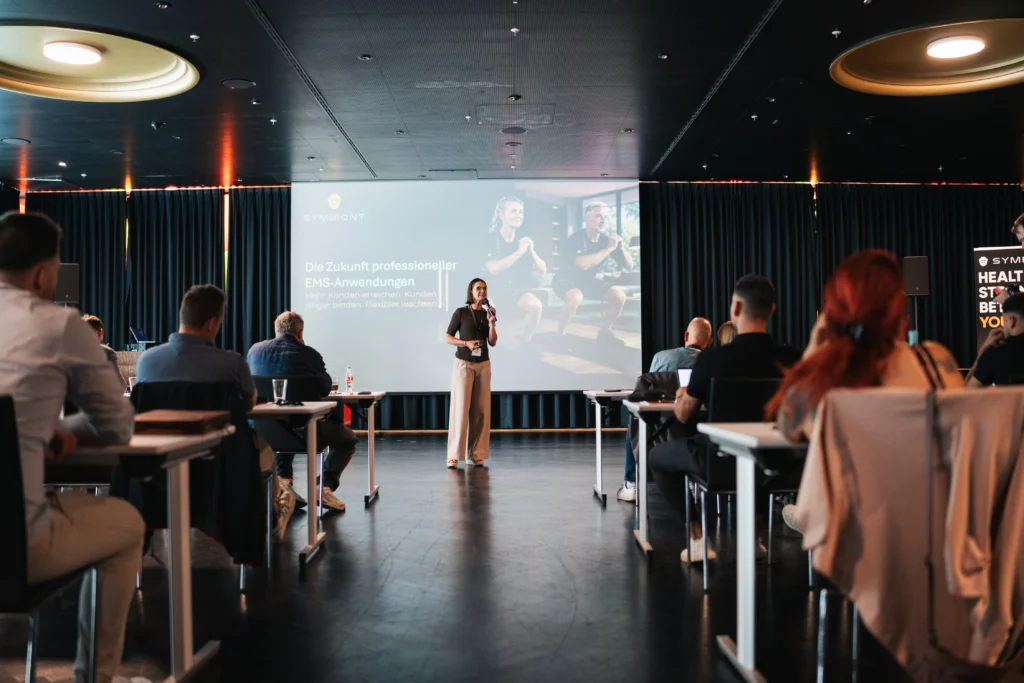
Anja Wolf from SYMBIONT built on these ideas with her presentation “The future of professional EMS applications: The hybrid model”.
The starting point was a simple observation: the traditional studio model works well for people who train regularly on site, prefer fixed appointments and value personal support. However, not every lifestyle fits this type of routine.
This is where a hybrid model comes in. Studio, home and on-the-go training are not viewed as separate options, but as connected parts of one flexible training concept. This makes it possible to adapt services more easily to different lifestyles and everyday situations.
For studio operators, this creates several opportunities: they can continue supporting existing members as their circumstances change, reach new target groups and develop services that are not tied to fixed in-person appointments.
Sharing experiences and continuing to develop together
After the presentations, the speakers came together once again for an expert panel. Questions about practical applications, the SYMBIONT App, training concepts and the future development of EMS were openly discussed.
The day ended in the same way it began: through conversation and exchange. During the shared aperitif and dinner at the Kameha Grand Hotel, participants had time to explore topics from the presentations in more detail, share experiences and make new connections.
The SYMBIONT Day in Bonn showed the value of open discussions about new approaches, practical experience and the continued development of EMS. We would like to thank all participants for their questions, discussions and personal conversations — and we are already looking forward to continuing this exchange at the next SYMBIONT Day on 10 October in Munich.